Clinical education · Delhi
Last Saturday we ran a closed-batch hands-on male infertility session for three gynaecologists, at their own centre. No auditorium, no slide deck marathon. Everyone handled the sample. Here is why that format teaches what a large CME cannot.
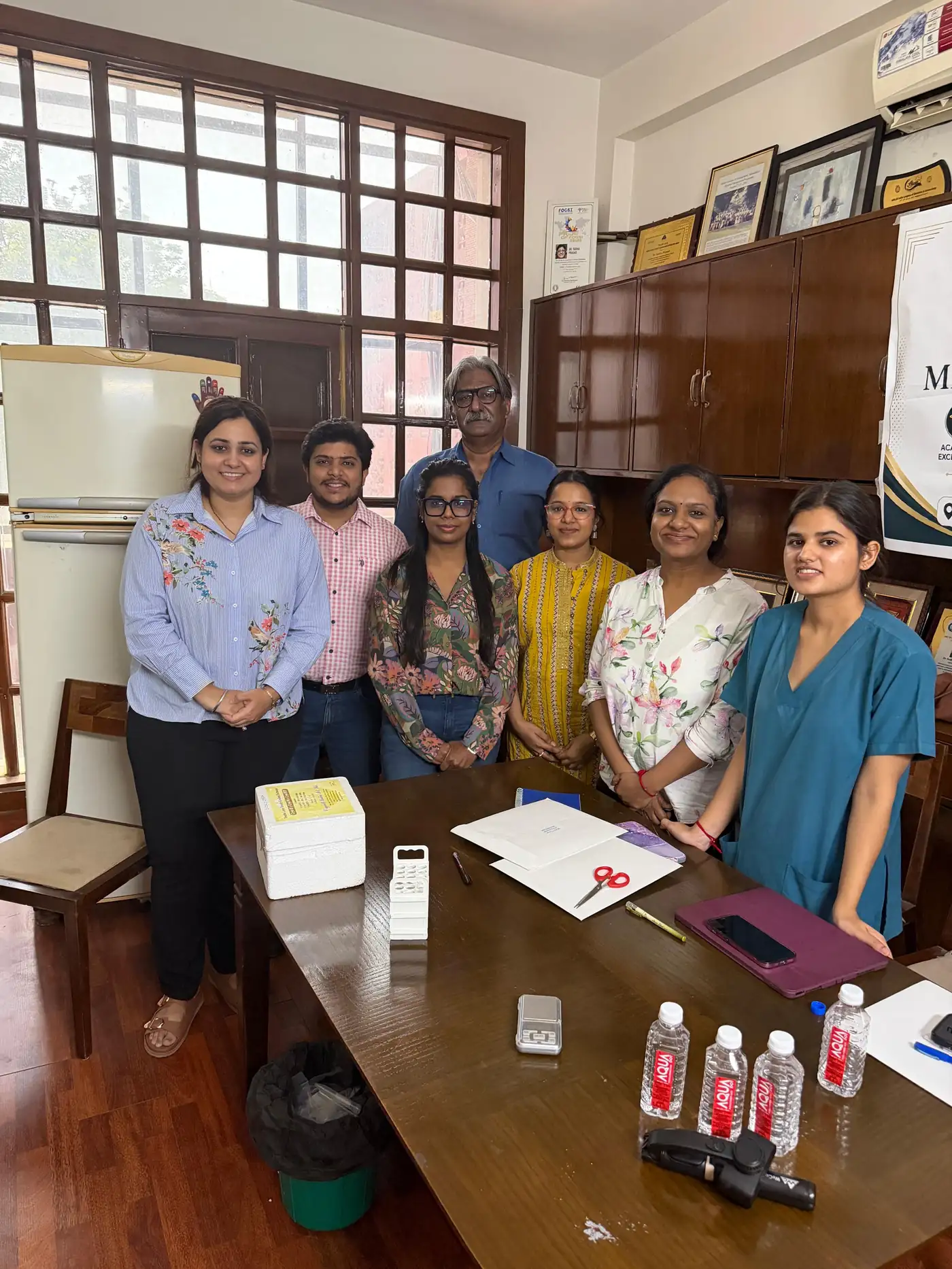
Cell Mate runs two kinds of andrology teaching. One is the large-format CME: a full room, a projected microscope field, a few hours, and a lot of ground covered. It works, and we will keep doing it, you can read about a recent one in our male infertility training for gynaecologists.
The other is this. Three clinicians. One bench. A full morning.
In a room of thirty, the faculty performs and the room watches. That is useful for concepts and for exposure, but there is a ceiling to it. Nobody in the audience has actually pipetted anything.
In a batch of three, the sequence inverts. The clinician does it; the faculty corrects. That changes what can be taught:
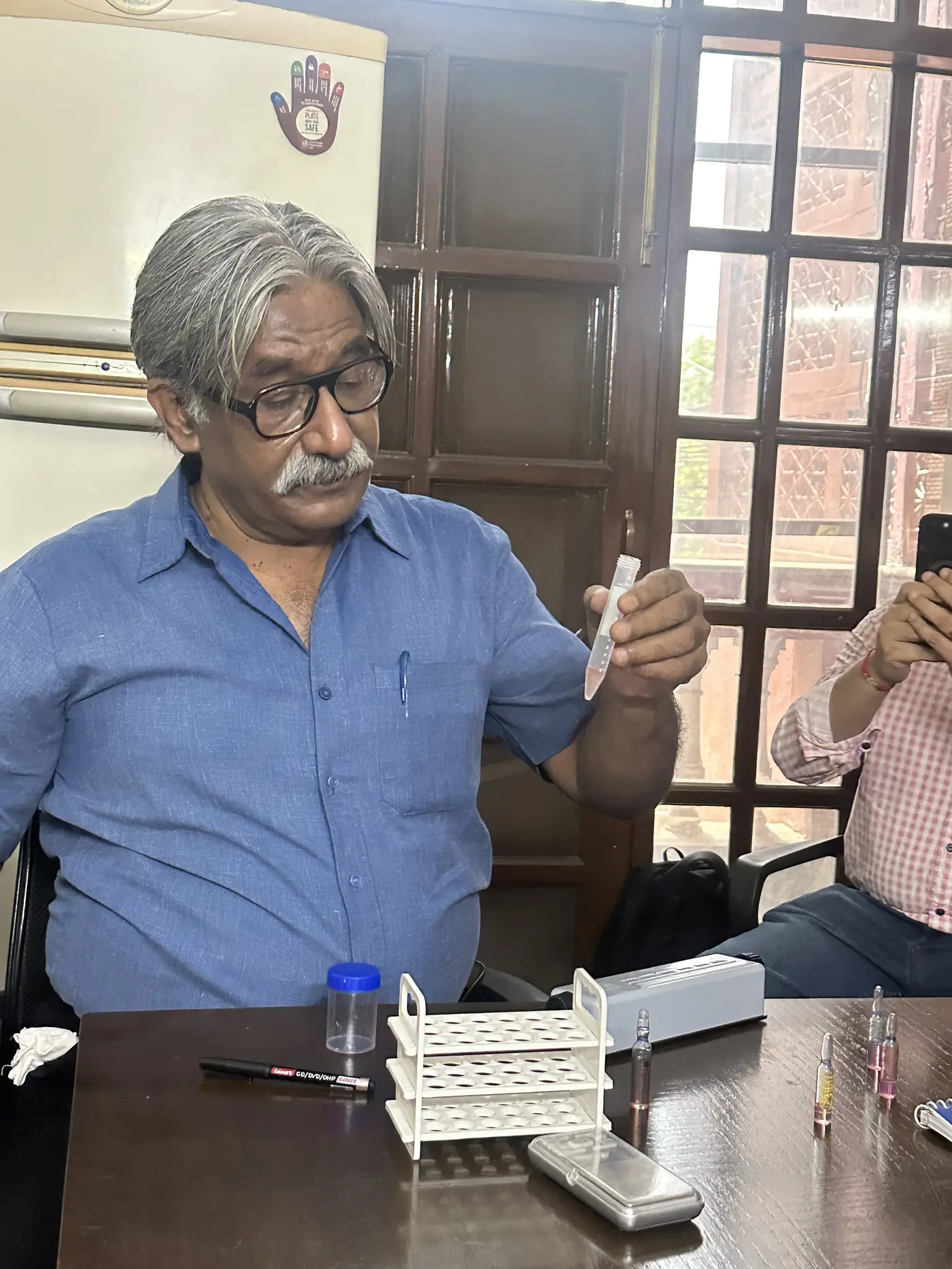
The content is the same andrology curriculum we teach in the larger sessions, compressed and made physical:
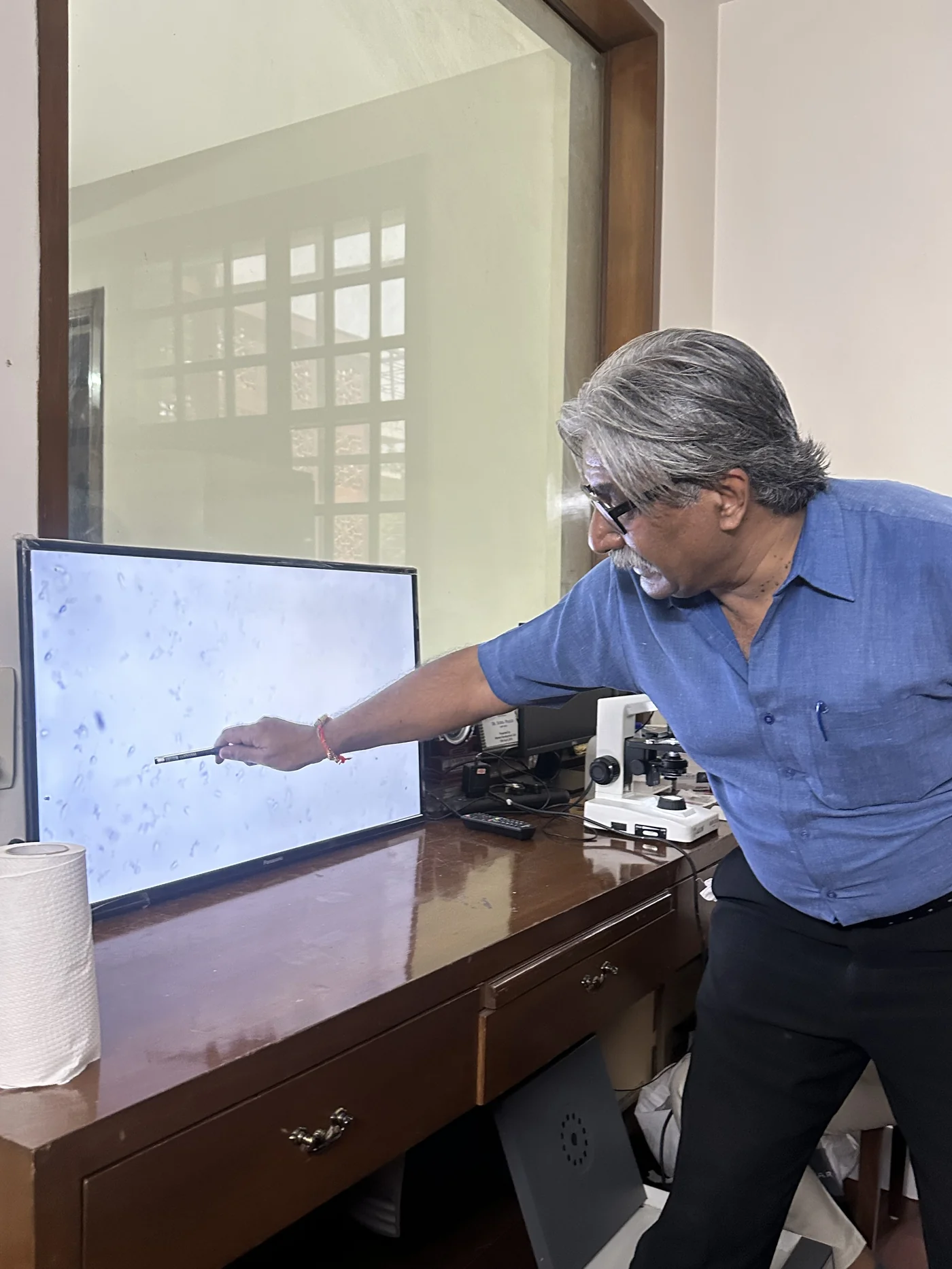
This session, like most of our small-batch work, ran at the doctors’ own centre rather than ours. That is deliberate.
Training on unfamiliar equipment teaches the technique but not the workflow. Running it on the microscope they will use on Monday, in the room where their samples are actually handled, means the learning survives contact with the practice. It also surfaces the practical things, where the centrifuge sits, how the reporting template is laid out, which step in their existing process is quietly costing them accuracy.
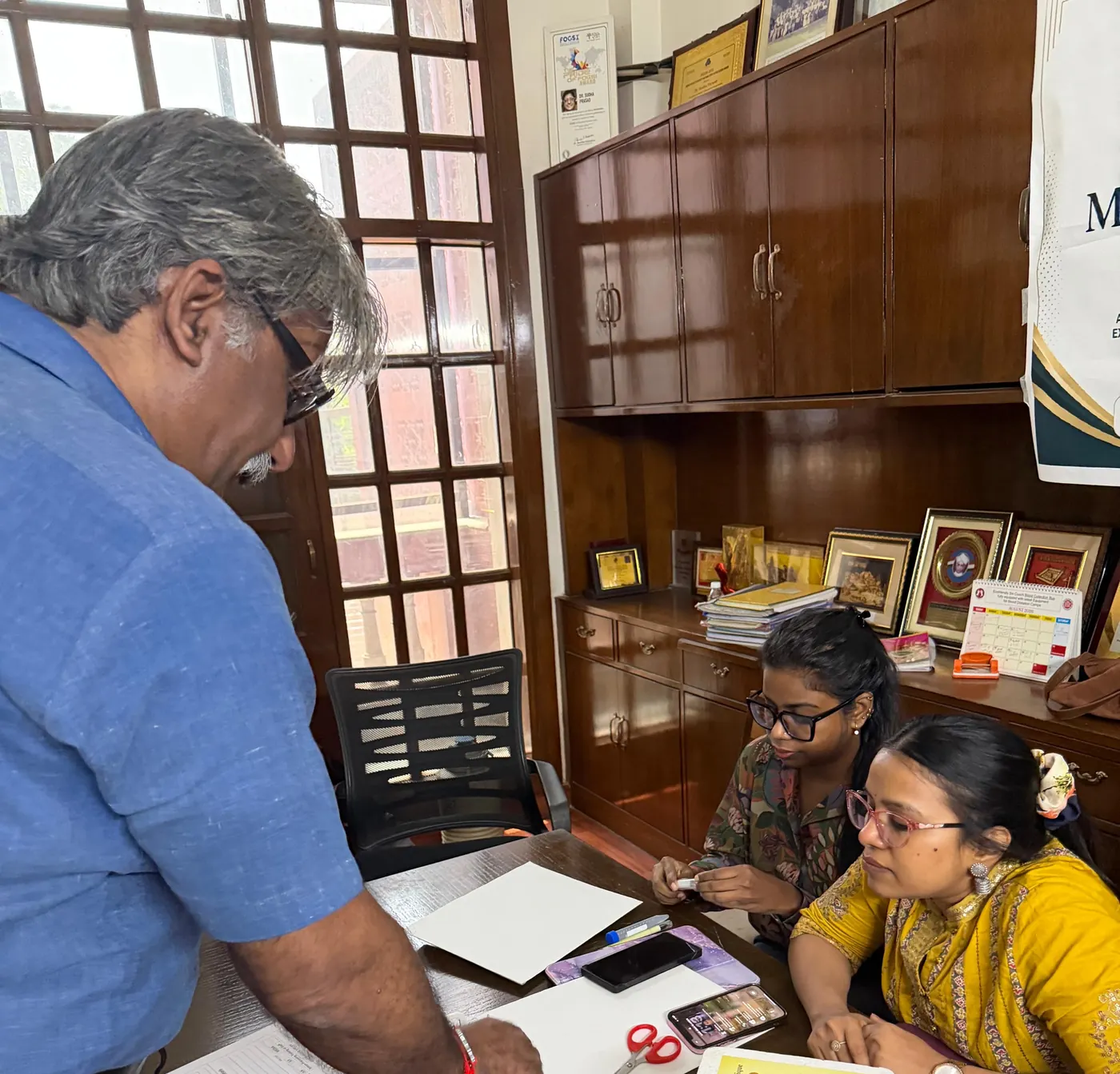
Cell Mate is preservation-only. We do not perform IVF or any fertility treatment, which means we are never in competition with the clinician sitting across the bench from us. Samples frozen with Cell Mate can be used at any clinic in India or abroad.
That structural fact is what makes this teaching straightforward. There is no referral pitch at the end, because there is nothing to refer for. The value of a gynaecologist who can read a semen report with confidence accrues to their patients, whether or not those patients ever encounter us.
A closed-batch session, typically three to six clinicians, run at the bench rather than in a lecture hall. Every participant handles the sample, works the microscope and performs the technique themselves, which is not possible in a large-format CME.
Gynaecologists and clinicians who see infertile couples and want to interpret semen analysis with confidence, understand what happens to a sample during processing, and know when to order second-line tests such as vitality or sperm DNA fragmentation.
Yes, and we prefer it. Running the session on your own microscope and in your own workflow means the training reflects the equipment and process you will actually use afterwards.
No. Cell Mate is preservation-only and does not perform IVF or any fertility treatment, so we are never in competition with the clinician who refers. Samples frozen with Cell Mate can be used at any clinic in India or abroad.
Small-batch andrology training for three to six clinicians, run at your own centre, on your own setup. Semen analysis, processing, vitality, morphology and DNA fragmentation.
Enquire about a session → Cell Mate