Clinical education · Delhi
Infertility affects roughly 1 in 6 couples worldwide, and about half of those cases involve a male factor. In practice, the male partner is often the last person tested. This is what changes when clinicians see the laboratory work for themselves.
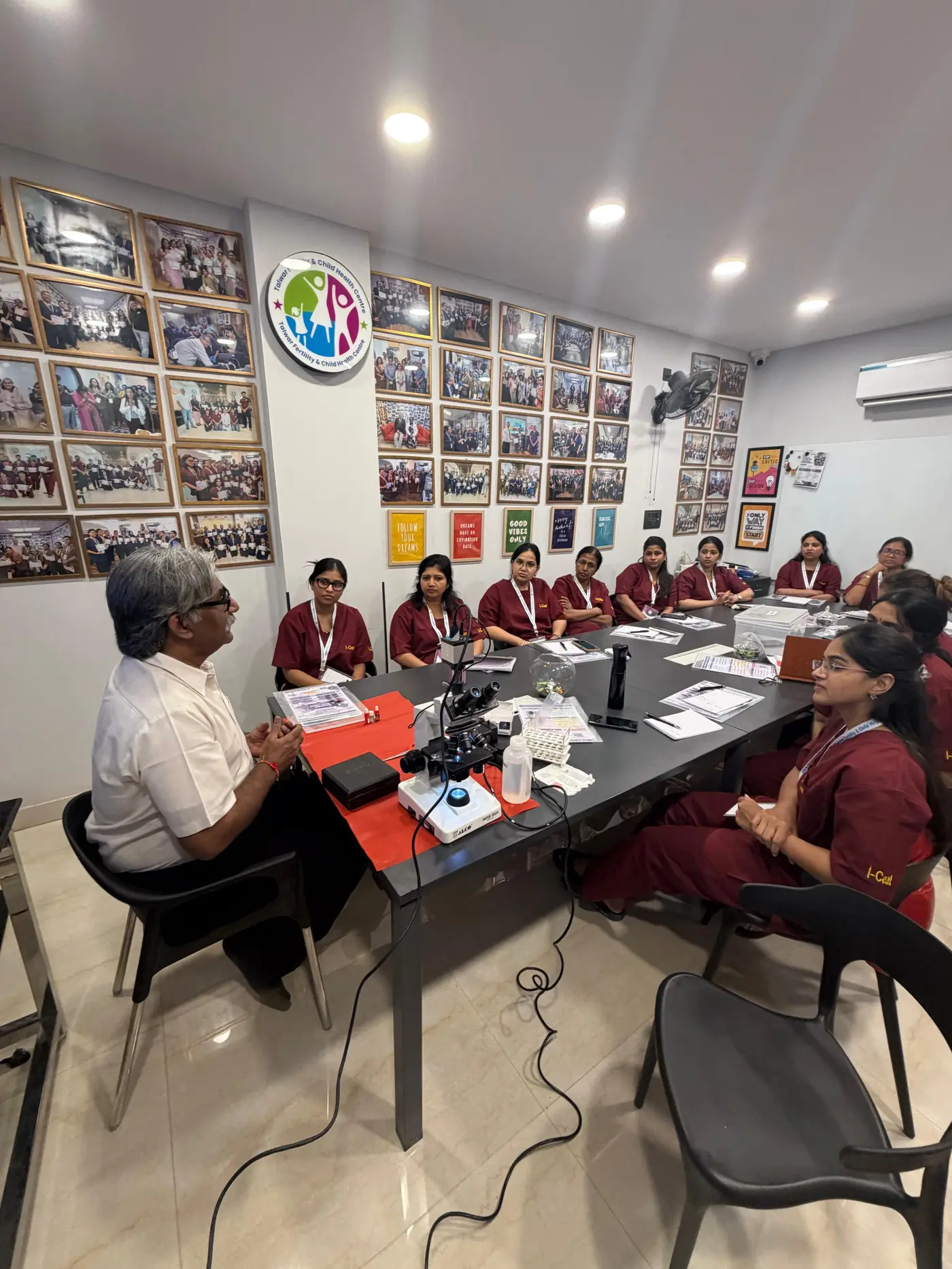
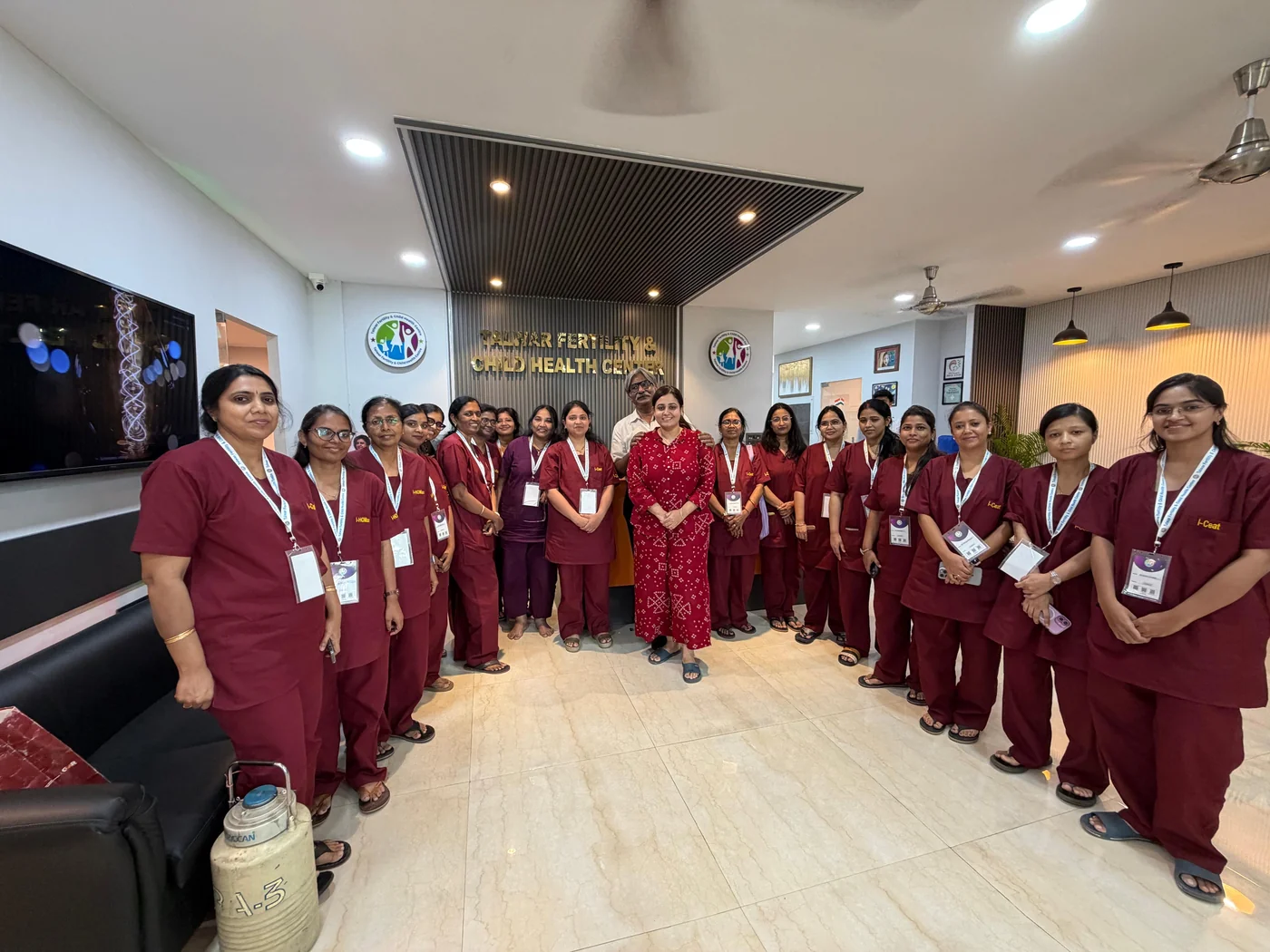
Cell Mate co-founder Rajnish Sehgal recently led a full-day andrology workshop in Delhi for gynaecologists who had travelled in from across the country. The subject was male factor infertility, and specifically the laboratory work that sits behind it.
The session ran at the microscope, with the field projected onto a screen for the room, because the point was not to recite reference values. It was to show clinicians what those values actually look like in a sample.
Infertility affects roughly 1 in 6 couples worldwide (WHO), and about half of those cases involve a male factor. In practice, the male partner is often the last person tested. A couple can spend a year in investigation on the female side before anyone asks for a semen analysis.
This is rarely a matter of clinical indifference. It is a training gap. Andrology gets very little dedicated time in most postgraduate pathways, and the laboratory side gets almost none. A clinician who has never watched a semen analysis being performed is understandably cautious about interpreting one, and far less likely to order the second-line tests that matter.
The first hour went to the report itself. Concentration, total count, motility grading, and how each parameter should be read against WHO reference values rather than treated as a pass or fail line.
A recurring theme: a single semen analysis is a snapshot, not a verdict. Counts fluctuate with illness, fever, abstinence period, stress and collection technique. Reference values describe a population, not an individual’s fertility. A result slightly below range is information, not a diagnosis, and a result inside range does not close the file.
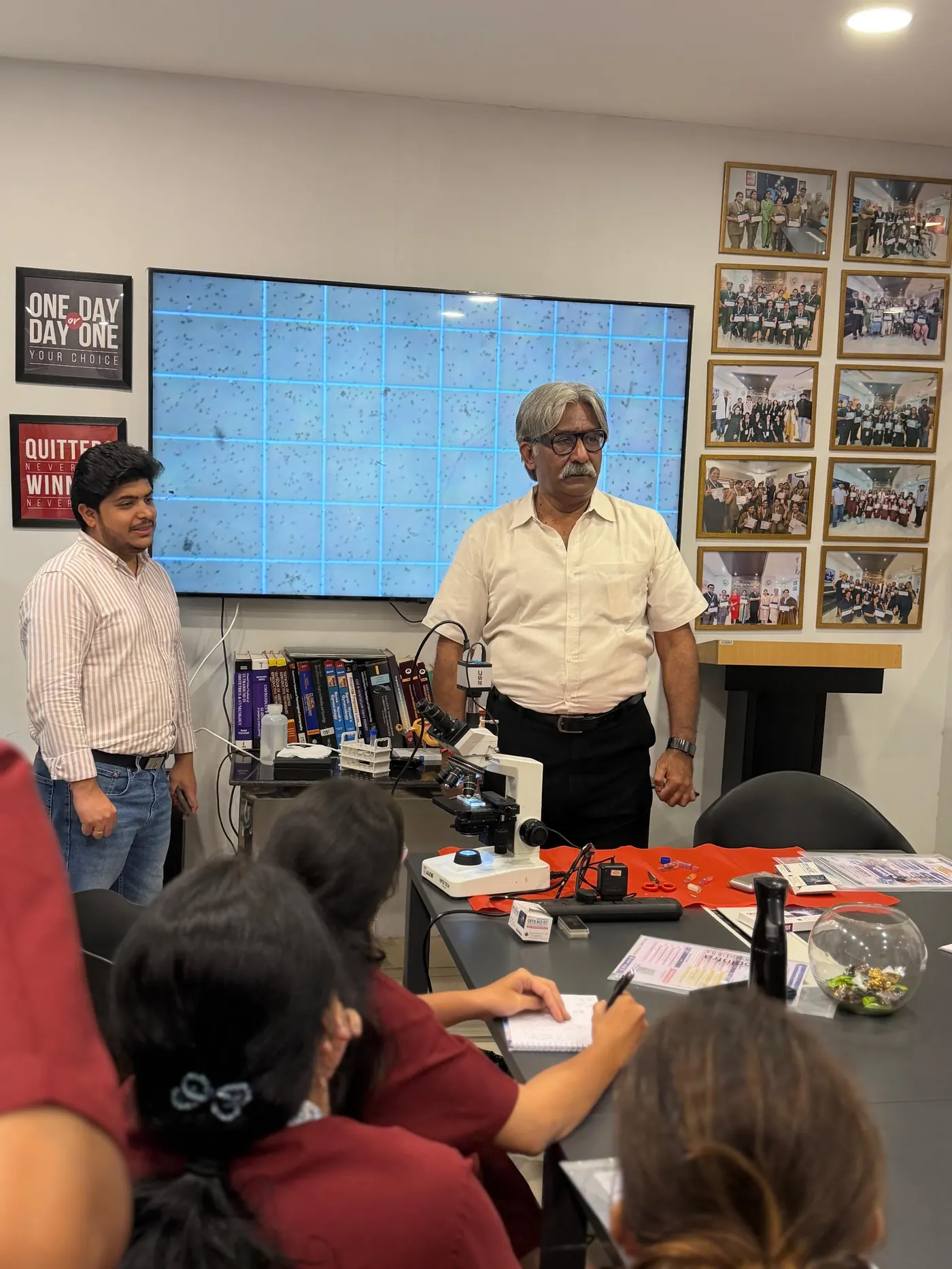
Processing was demonstrated live, with more than one method shown side by side. The teaching point was the reasoning, not the protocol: which technique suits which sample, what each one does to yield and to the quality of what you recover, and where the trade-offs sit.
For clinicians who refer out for processing rather than performing it, this matters. Knowing what happens to a sample after it leaves the room changes how you counsel on results.
Vitality separates two findings that look identical on a motility count. Sperm can be immotile and alive, or immotile and dead, and the distinction changes the clinical direction entirely. The session covered how the test is performed and when it should be requested, particularly in cases of severe asthenozoospermia.
Morphology is one of the most inconsistently reported parameters in Indian labs. The workshop covered assessment under strict criteria, what the common defects look like at the scope, and why two labs can return meaningfully different morphology percentages on the same sample.
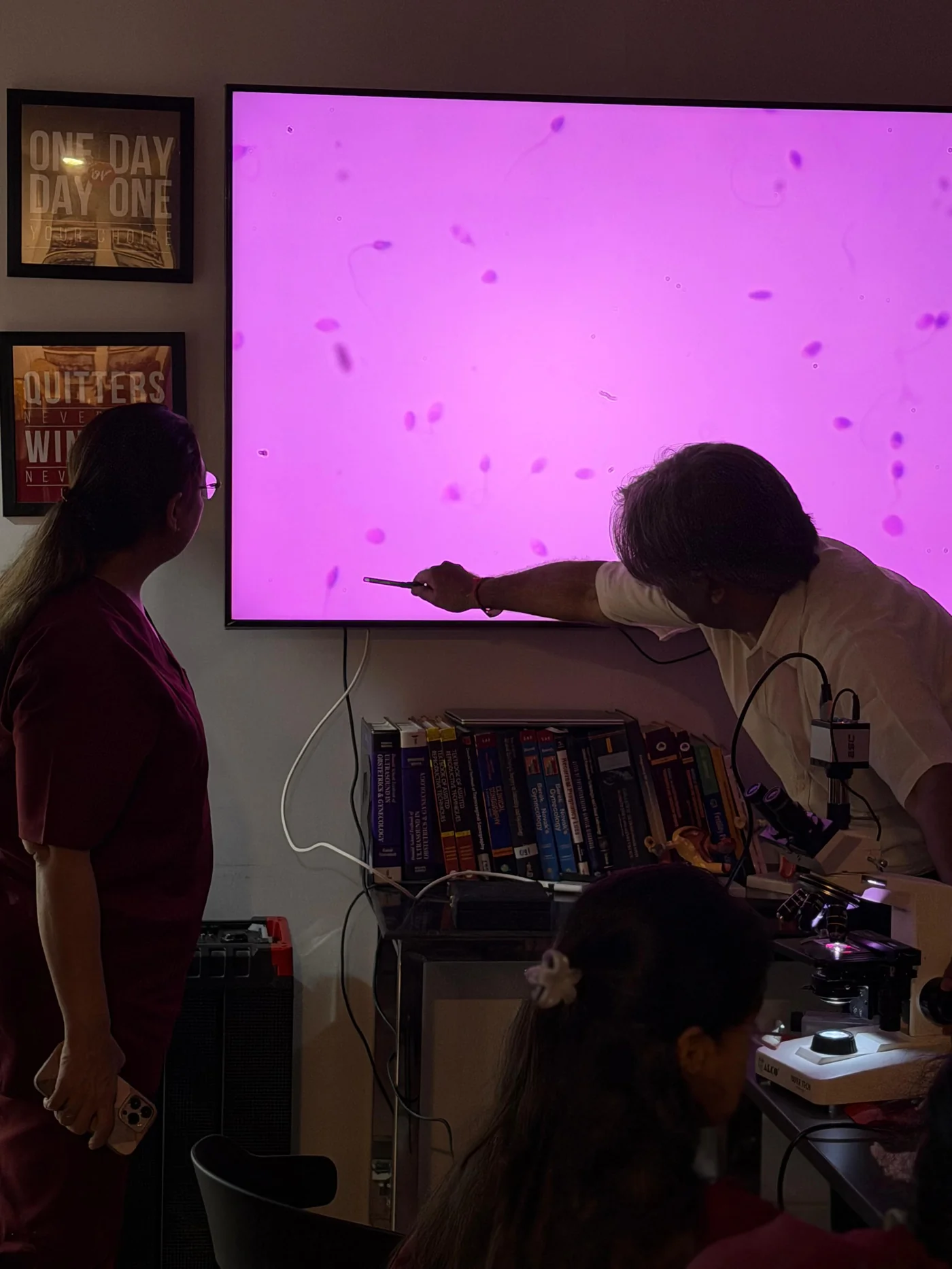
This is where the room stayed longest.
Sperm DNA fragmentation measures damage to the genetic material inside the sperm, which a conventional semen analysis cannot detect. Count, motility and morphology can all sit comfortably in range while a significant proportion of sperm carry fragmented DNA.
It is associated with unexplained infertility, recurrent pregnancy loss and failed IVF or ICSI cycles. It is also still rarely ordered in India, largely because it is rarely taught. Contributing factors discussed included oxidative stress, varicocele, infection, heat exposure, smoking and advancing paternal age.
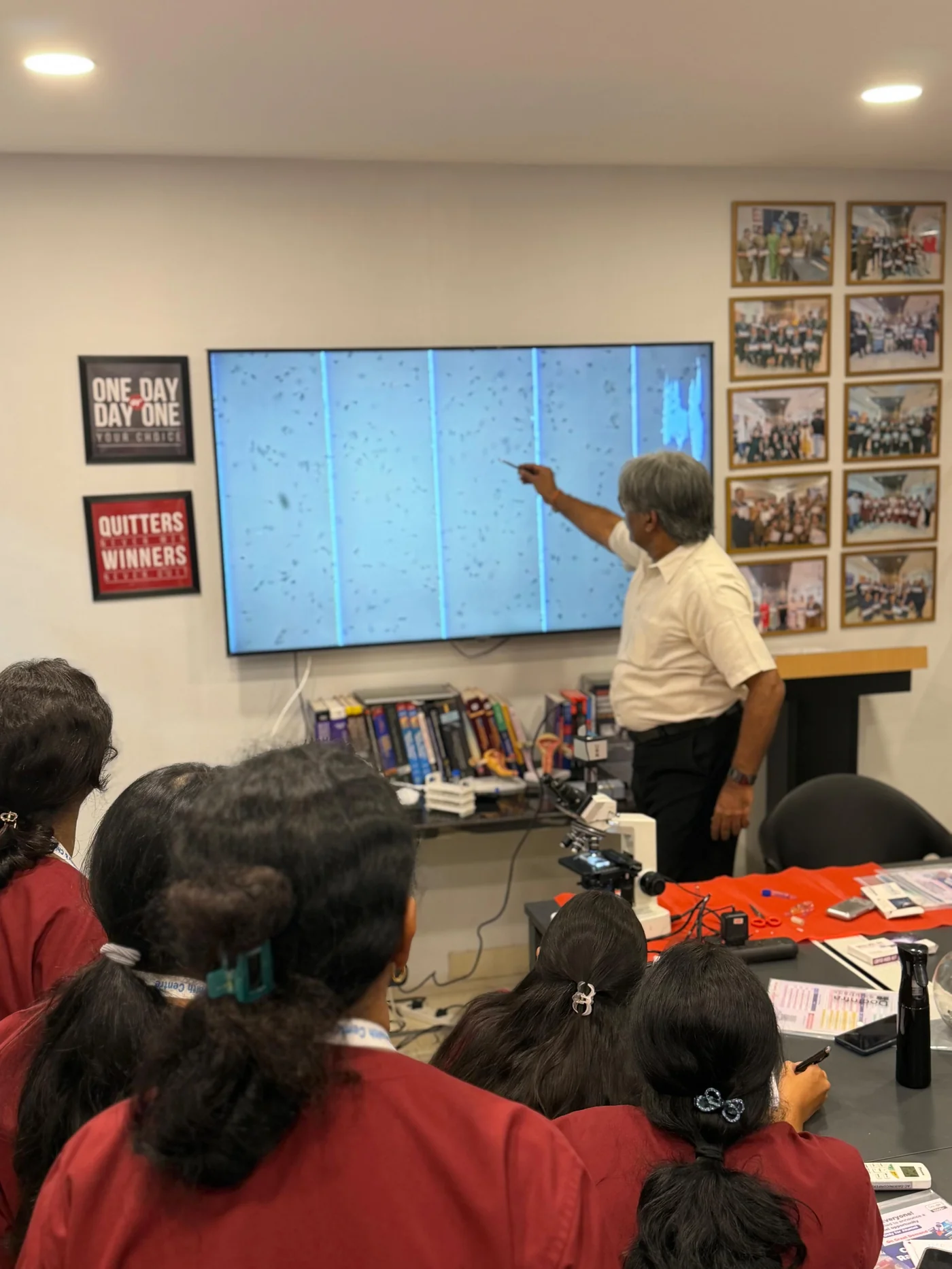
Cell Mate’s clinical side rests on 35+ years of andrology and cryopreservation practice, and teaching has been part of that work throughout. Sessions like this one are not a lead channel. They are how the standard of male fertility evaluation moves in a country where most of it happens outside specialist centres.
Every gynaecologist who leaves a session able to read a semen report with confidence changes the pathway for the couples in front of them, whether or not those couples ever encounter Cell Mate.
It is largely a training gap rather than clinical indifference. Andrology receives very little dedicated time in most postgraduate pathways, and the laboratory side receives almost none. A clinician who has never watched a semen analysis being performed is understandably cautious about interpreting one, and less likely to order the second-line tests that matter.
No. A single semen analysis is a snapshot, not a verdict. Counts fluctuate with illness, fever, abstinence period, stress and collection technique. WHO reference values describe a population, not an individual’s fertility. A result slightly below range is information, not a diagnosis, and a result inside range does not close the file.
It measures damage to the genetic material inside the sperm, which a conventional semen analysis cannot detect. Count, motility and morphology can all sit in range while a significant proportion of sperm carry fragmented DNA. It is associated with unexplained infertility, recurrent pregnancy loss and failed IVF or ICSI cycles, and is worth considering when a standard workup is clean but the couple still cannot conceive.
Vitality separates two findings that look identical on a motility count. Sperm can be immotile and alive, or immotile and dead, and the distinction changes the clinical direction entirely. It is particularly relevant in severe asthenozoospermia.
Yes. Cell Mate runs andrology training and CME sessions for gynaecologists and clinicians on male fertility evaluation, laboratory technique, and fertility preservation before cancer treatment. Cell Mate is preservation-only and does not perform fertility treatment, so we are never in competition with the clinician who refers.
We run andrology training and CME sessions on male fertility evaluation and on preservation before cancer treatment. Cell Mate is preservation-only, samples frozen with us can be used at any clinic in India or abroad, so we are never in competition with the clinician who refers.
Enquire about training → Cell Mate