 Cell Mate
Medicine never stops evolving, neither should doctors
Every year, new research, technologies, and treatment approaches reshape the way we diagnose and treat infertility. Keeping pace with these advances is essential, not only for fertility specialists but for every healthcare professional involved in reproductive medicine.
At Cell Mate, we believe that improving patient outcomes starts with improving medical education.
On the eve of Doctors' Day, our team had the privilege of conducting a hands-on workshop on male infertility at UCMS & GTB Hospital, Delhi, organised by the Department of Obstetrics & Gynecology under the aegis of the AOGD Infertility & Reproductive Endocrinology Subcommittee, bringing together gynecologists, postgraduate students, and future fertility specialists for a day dedicated to practical learning and scientific discussion.
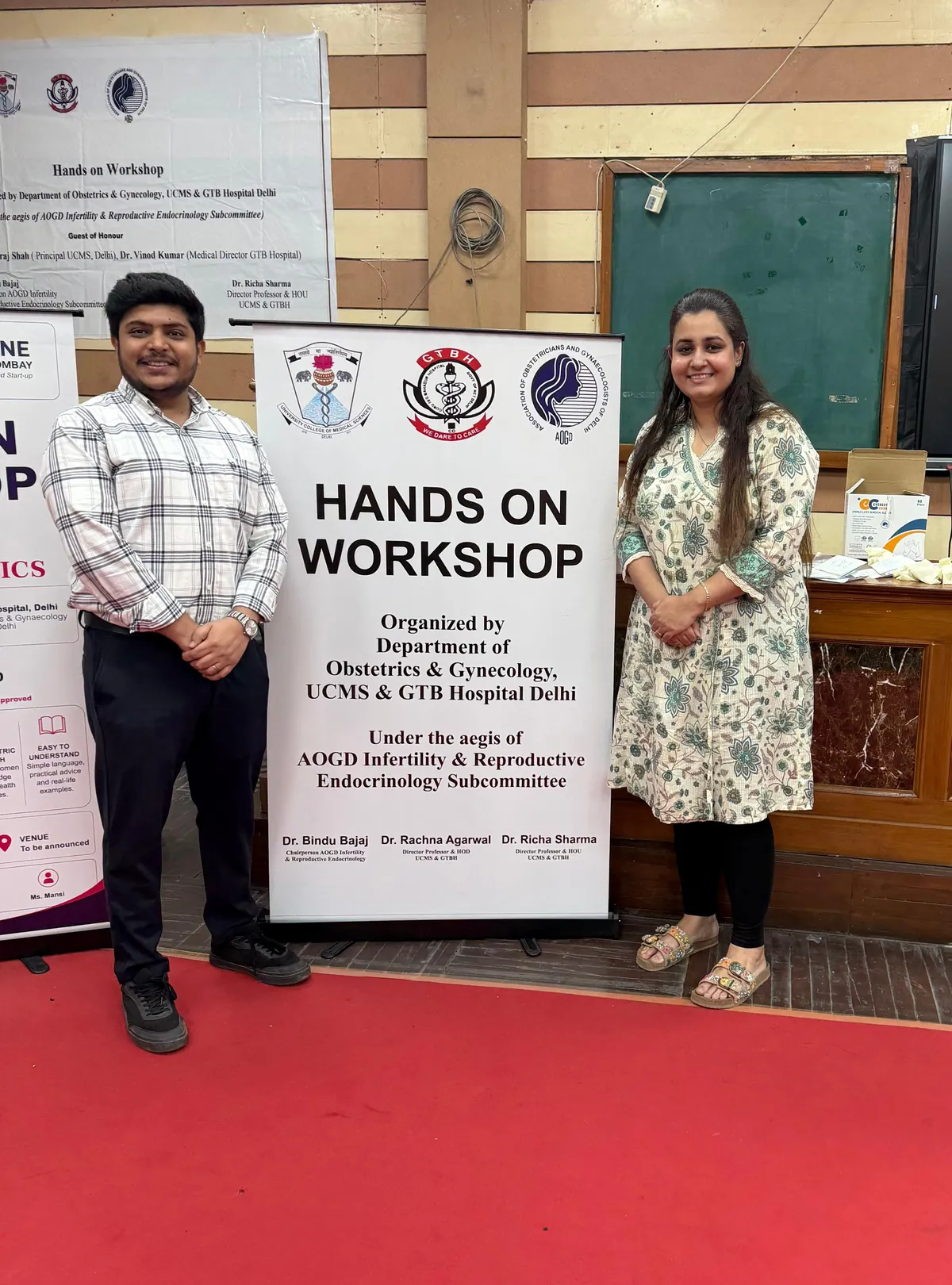
The hands-on workshop at UCMS & GTB Hospital, Delhi, organised by the Department of Obstetrics & Gynecology under the aegis of the AOGD Infertility & Reproductive Endocrinology Subcommittee.
Why male infertility deserves greater attention
Infertility affects millions of couples worldwide, and male factors contribute to nearly half of all infertility cases. Yet discussions around fertility often focus predominantly on women.
Modern reproductive medicine requires equal attention to both partners. Accurate diagnosis of male infertility can significantly improve treatment planning, reduce unnecessary interventions, and improve pregnancy outcomes.
That begins with understanding advanced andrology, not simply performing a routine semen analysis.
Beyond a routine semen analysis
One of the key objectives of the workshop was helping participants understand why an advanced andrology laboratory differs significantly from a conventional pathology laboratory.
The hands-on training covered:
- WHO-standard semen analysis
- Sperm morphology assessment
- Sperm DNA fragmentation testing
- Advanced sperm function tests
- Quality control in an andrology laboratory
- Semen preparation techniques for IUI, IVF and ICSI
- Laboratory protocols that directly influence treatment outcomes
Rather than focusing only on reports, participants learned how laboratory decisions influence clinical decision-making and patient care.
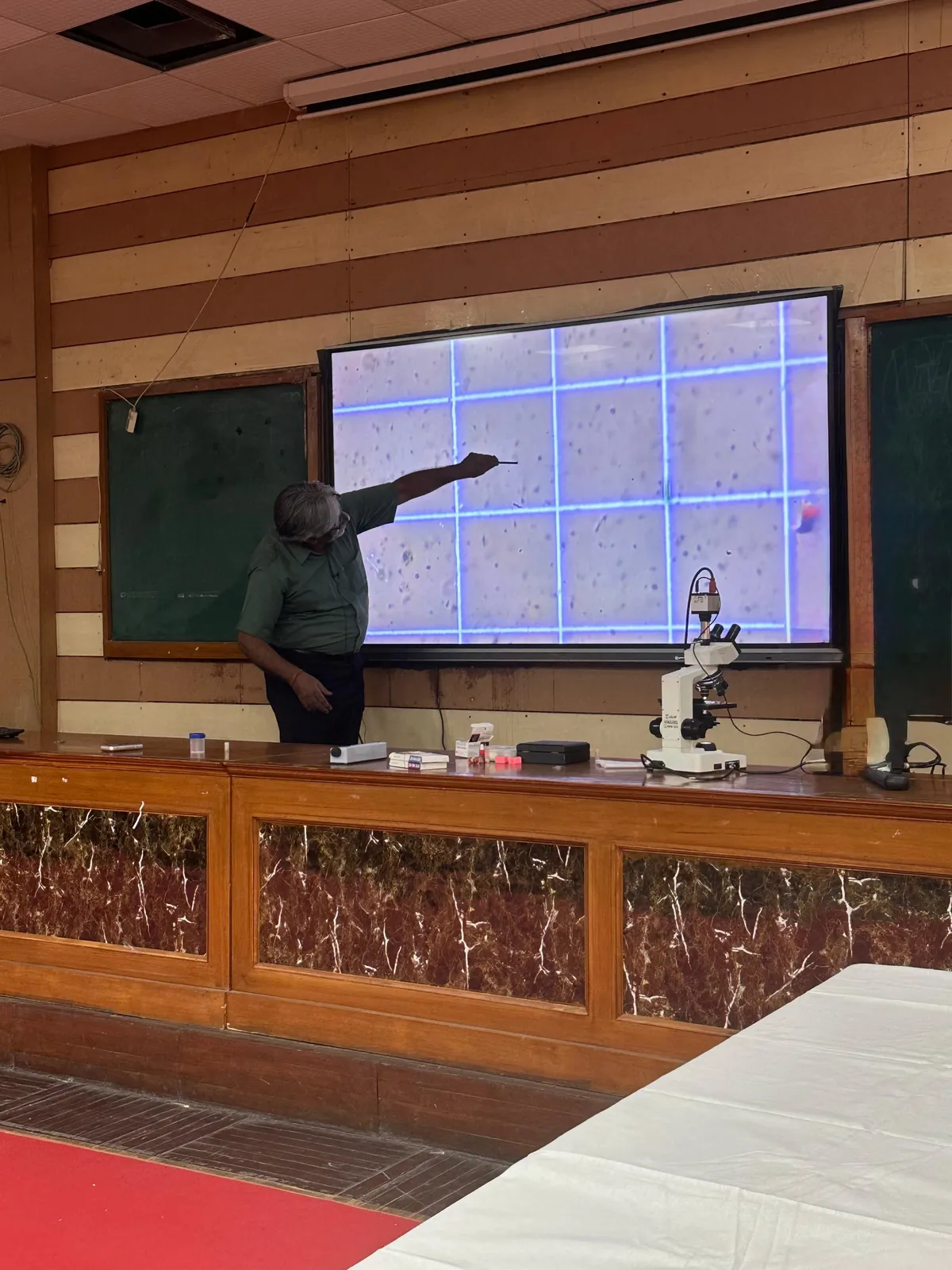
Live demonstration: semen analysis under the microscope, projected in real time for participants.
Learning by doing: why hands-on training matters
Reading protocols in textbooks provides knowledge. Performing them under expert guidance builds confidence.
Throughout the workshop, doctors and postgraduate students actively participated in practical laboratory demonstrations, asked questions, discussed challenging cases, and observed best practices followed in modern fertility laboratories.
This interactive approach helps bridge the gap between theory and clinical practice, ultimately improving the quality of care delivered to patients.
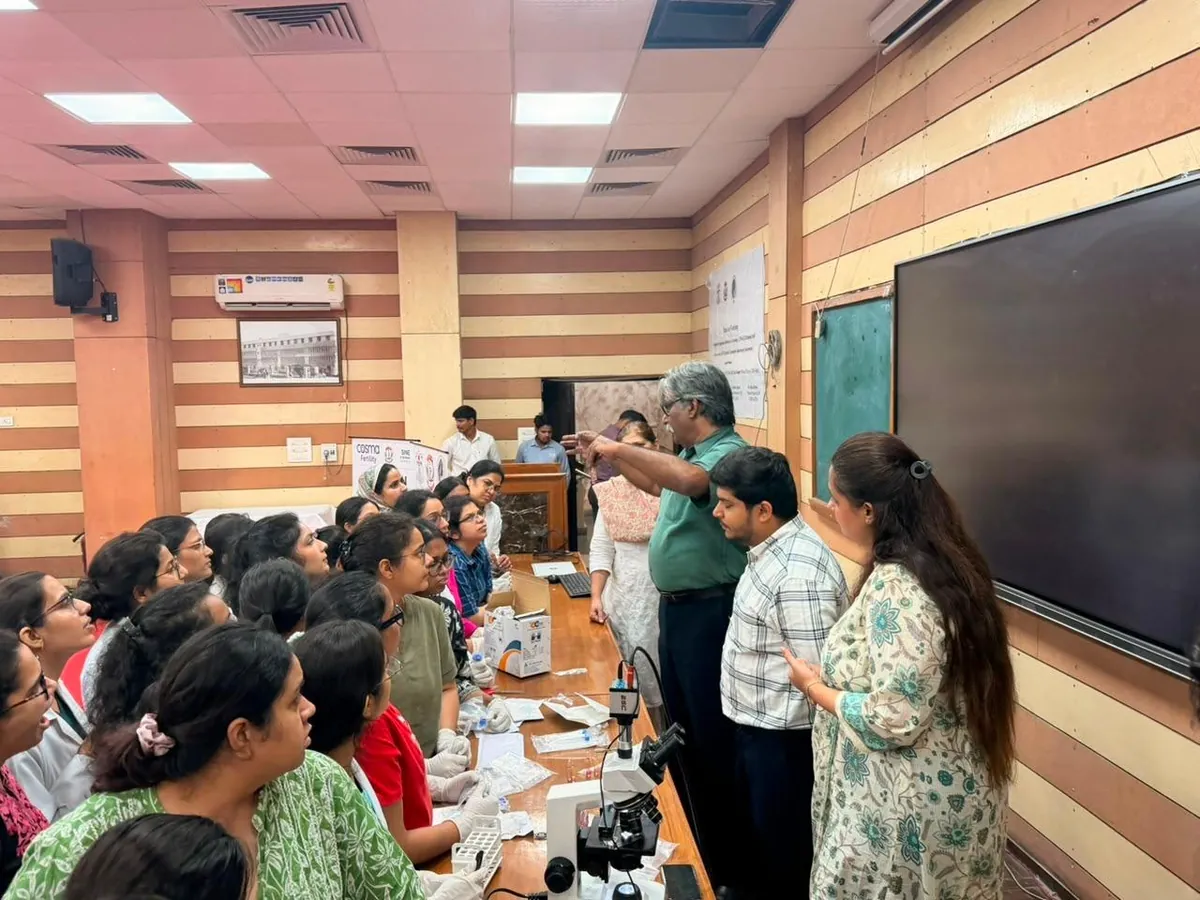
Gynecologists and postgraduate students at the practical laboratory stations during the hands-on sessions.
Rajnish Sehgal: sharing knowledge beyond the laboratory
The workshop was led by Rajnish Sehgal, Co-Founder and Chief Technology Officer at Cell Mate, whose expertise spans embryology, andrology, fertility laboratory management, and reproductive sciences.
Over the years, Rajnish has trained gynecologists, embryologists, IVF professionals, laboratory scientists, postgraduate students, and aspiring fertility specialists across India. For him, teaching has always been as important as laboratory excellence.
His sessions focus not only on how laboratory procedures are performed, but why each protocol matters, helping healthcare professionals understand the science behind every decision.
Dr. Sakshi Sehgal: bringing the clinical perspective
Supporting the practical sessions was Dr. Sakshi Sehgal, Co-Founder and COO at Cell Mate, who guided doctors and postgraduate students through the hands-on laboratory exercises while connecting laboratory findings with real-world patient care.
She also highlighted an increasingly important topic in reproductive medicine, fertility preservation.
As more individuals choose to delay parenthood or undergo medical treatments such as chemotherapy that may affect fertility, awareness around egg freezing and sperm freezing has become more important than ever. Early counselling gives patients more reproductive choices in the future.
For healthcare professionals, understanding when to discuss fertility preservation can have a lasting impact on a patient's quality of life.
Why fertility preservation should be part of every medical conversation
Fertility preservation is no longer limited to oncology patients. Today, many individuals choose fertility preservation because of:
- Career planning
- Delayed parenthood
- Medical conditions affecting fertility
- Autoimmune disorders
- Endometriosis
- Cancer treatments
- Gender-affirming treatments
- Personal reproductive planning
Procedures such as egg freezing and sperm freezing provide an opportunity to preserve fertility before it naturally declines or before medical treatments impact reproductive health. Increasing awareness among doctors allows more patients to make informed decisions at the right time.
Cell Mate's commitment to fertility education in Delhi NCR
At Cell Mate, we believe our responsibility extends beyond providing fertility preservation services. Through our Knowledge Hub, educational workshops, hospital collaborations, and hands-on training programs, we aim to support doctors, embryologists, students, and healthcare professionals with evidence-based education.
Whether the topic is male infertility, female fertility, egg freezing, sperm freezing, fertility preservation, embryology, or laboratory sciences, our goal remains the same:
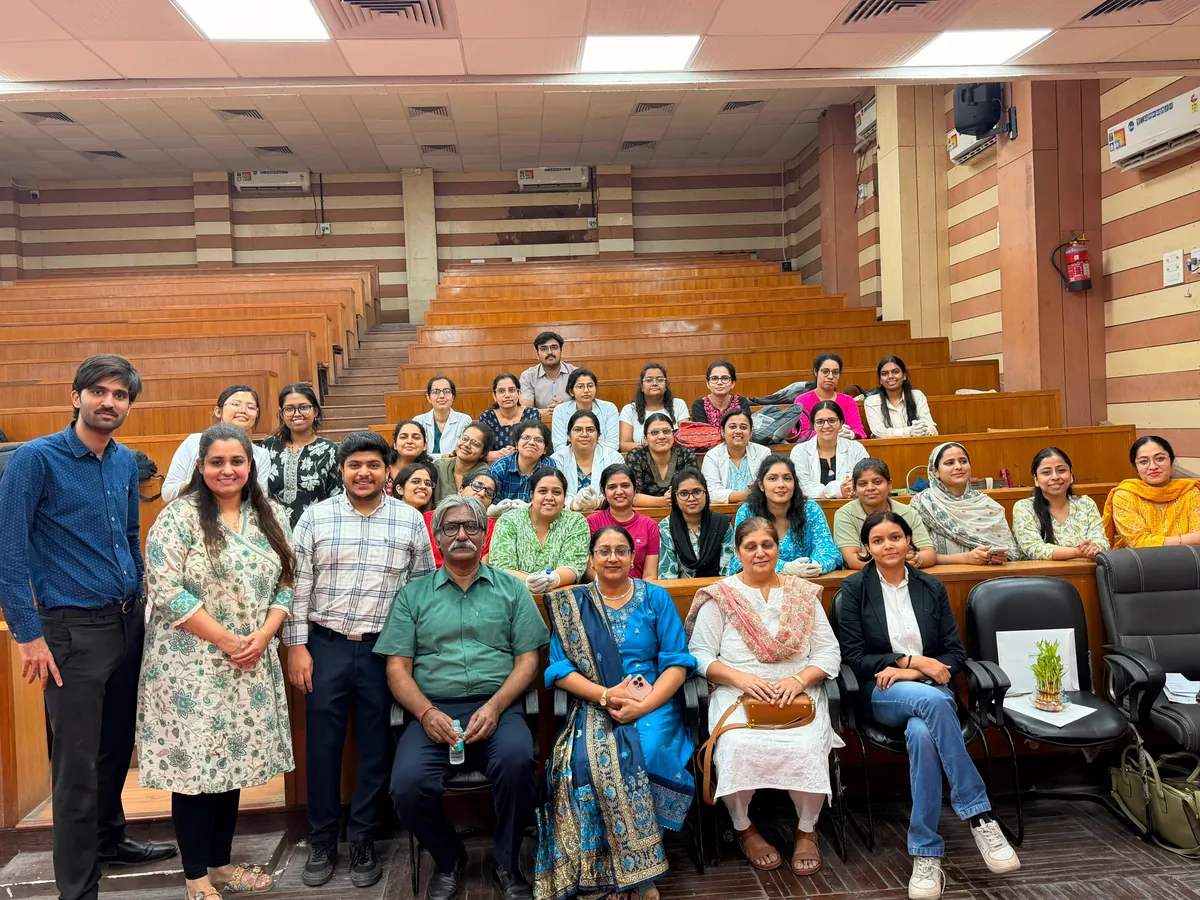
The full cohort of participating doctors and postgraduate students at UCMS & GTB Hospital.
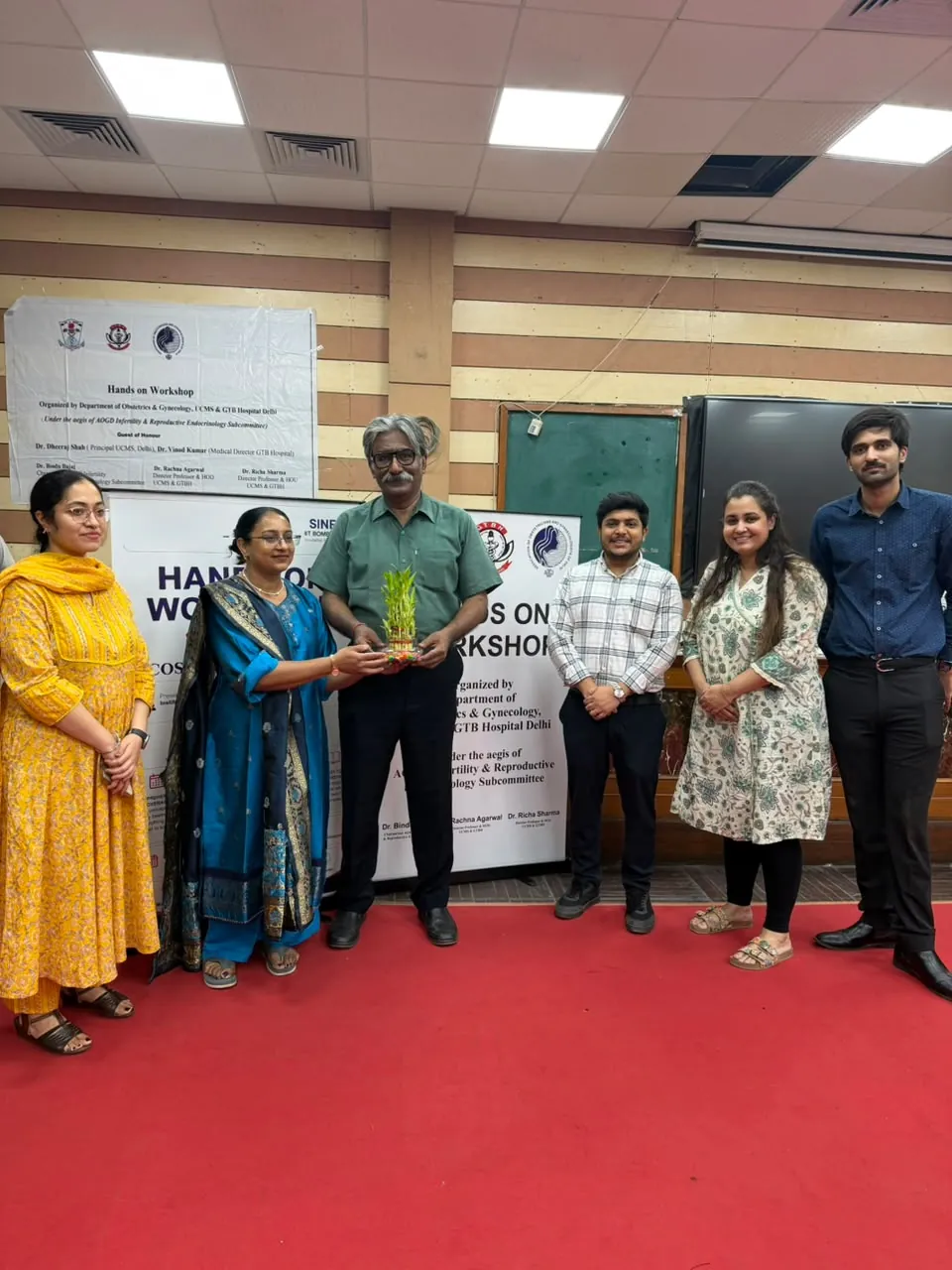
Felicitation by the faculty of UCMS & GTB Hospital.
Looking ahead
Medicine advances because healthcare professionals continue asking questions, learning new techniques, and sharing knowledge.
The enthusiasm shown by the doctors and postgraduate students at UCMS & GTB Hospital was a reminder that the future of healthcare depends not only on innovation, but also on education.
At Cell Mate, we remain committed to supporting this journey, through meaningful workshops, evidence-based resources, and a growing community of healthcare professionals dedicated to improving reproductive care.
Frequently asked questions
What is fertility preservation?
Fertility preservation refers to medical techniques used to safeguard an individual's ability to have biological children in the future. Common options include egg freezing and sperm freezing.
Who should consider egg freezing?
Egg freezing may be considered by women planning delayed parenthood, those diagnosed with medical conditions that may affect fertility, or individuals undergoing treatments such as chemotherapy.
When should sperm freezing be considered?
Sperm freezing is recommended before cancer treatment, certain surgeries, vasectomy, or for individuals who wish to preserve fertility for future family planning.
Why is an advanced semen analysis important?
A comprehensive semen analysis performed in a specialized andrology laboratory provides significantly more diagnostic information than routine pathology testing, helping clinicians make better treatment decisions.
Why are hands-on workshops important for doctors?
Hands-on training helps healthcare professionals gain practical experience, understand laboratory protocols, ask questions in real time, and apply evidence-based practices in clinical settings.
About Cell Mate
Cell Mate is India's first consumer-first fertility preservation brand, dedicated to empowering individuals with options for the future through egg freezing, sperm freezing, and fertility preservation. Alongside patient care, Cell Mate actively contributes to medical education through its Knowledge Hub, workshops, and collaborations with hospitals and healthcare institutions across Delhi NCR and India.
Your fertility. Your terms. Your timeline.
Thinking about preserving your fertility? Speak to our team, no pressure, no sales pitch, just science.
Book a free consultation Explore the Knowledge Hub