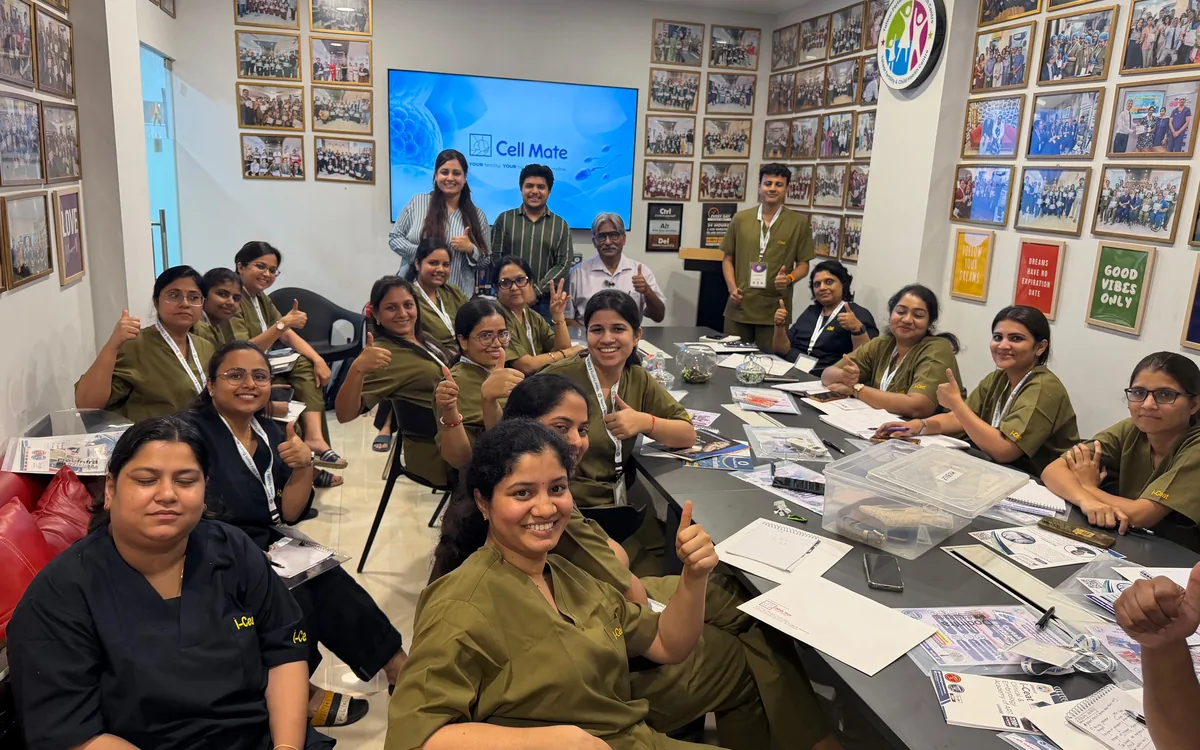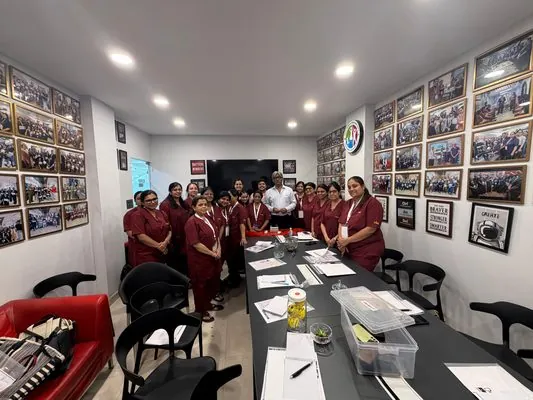
A day, not a lecture
The cohorts are clinicians, not laboratory staff. They order the tests, read the numbers and counsel the couple, and almost none of them were shown the bench work that produces those numbers.
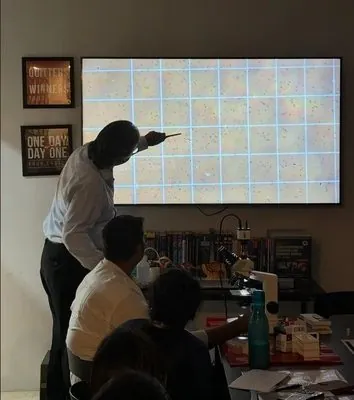
So the session starts with a sample and a microscope. Loading the counting chamber. Watching a dilution go wrong, then right. Making a smear thin enough to read, staining it, and judging morphology under strict criteria on something genuinely difficult.
Then the parameters that rarely get ordered. Vitality, which tells you whether an immotile sperm is alive or dead and changes the prognosis entirely. DNA fragmentation, which can be high behind a report that looks perfectly normal.
What comes up in every cohort is the same realisation: the top three numbers on a semen report are not the report.