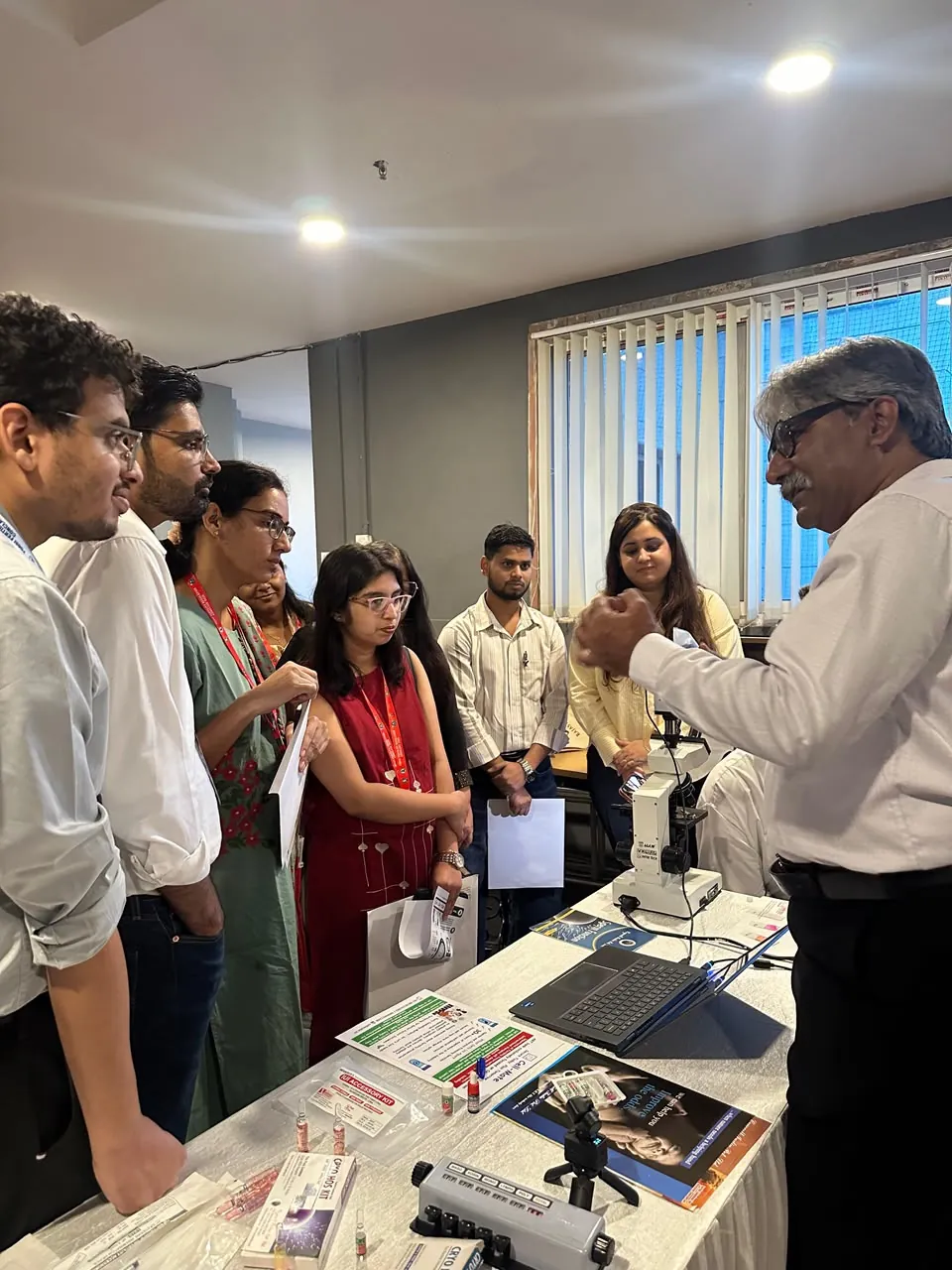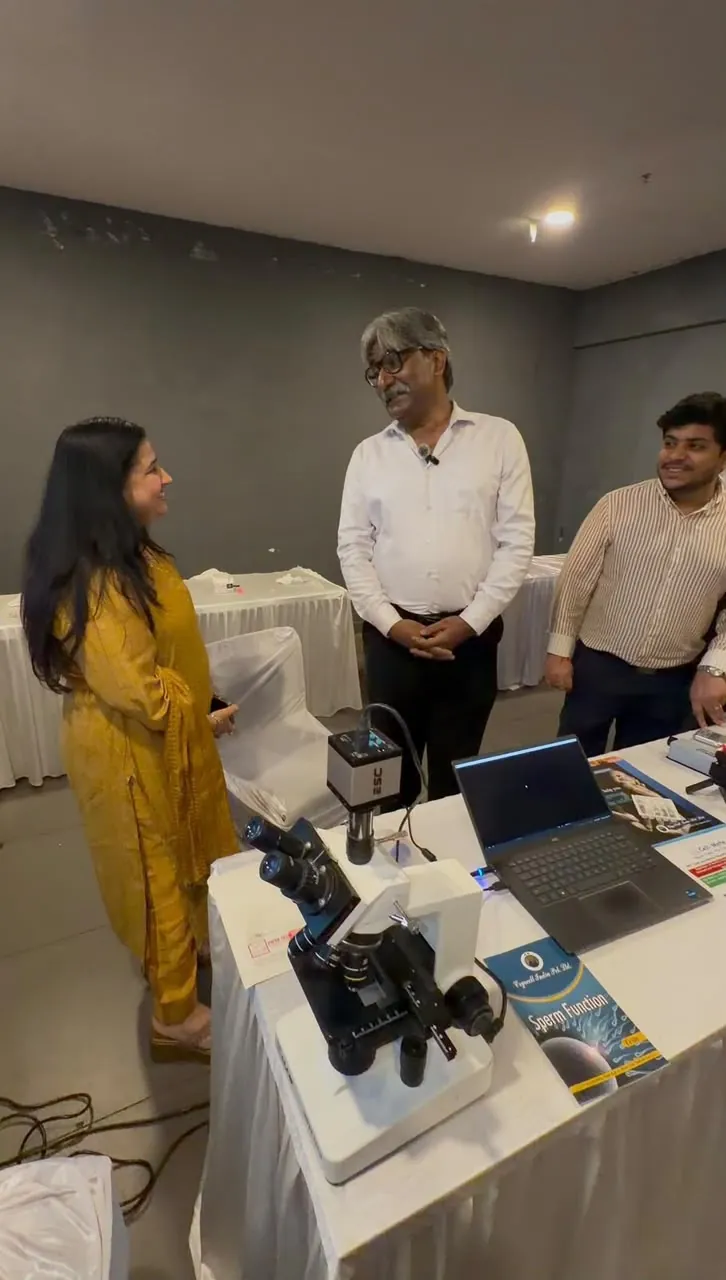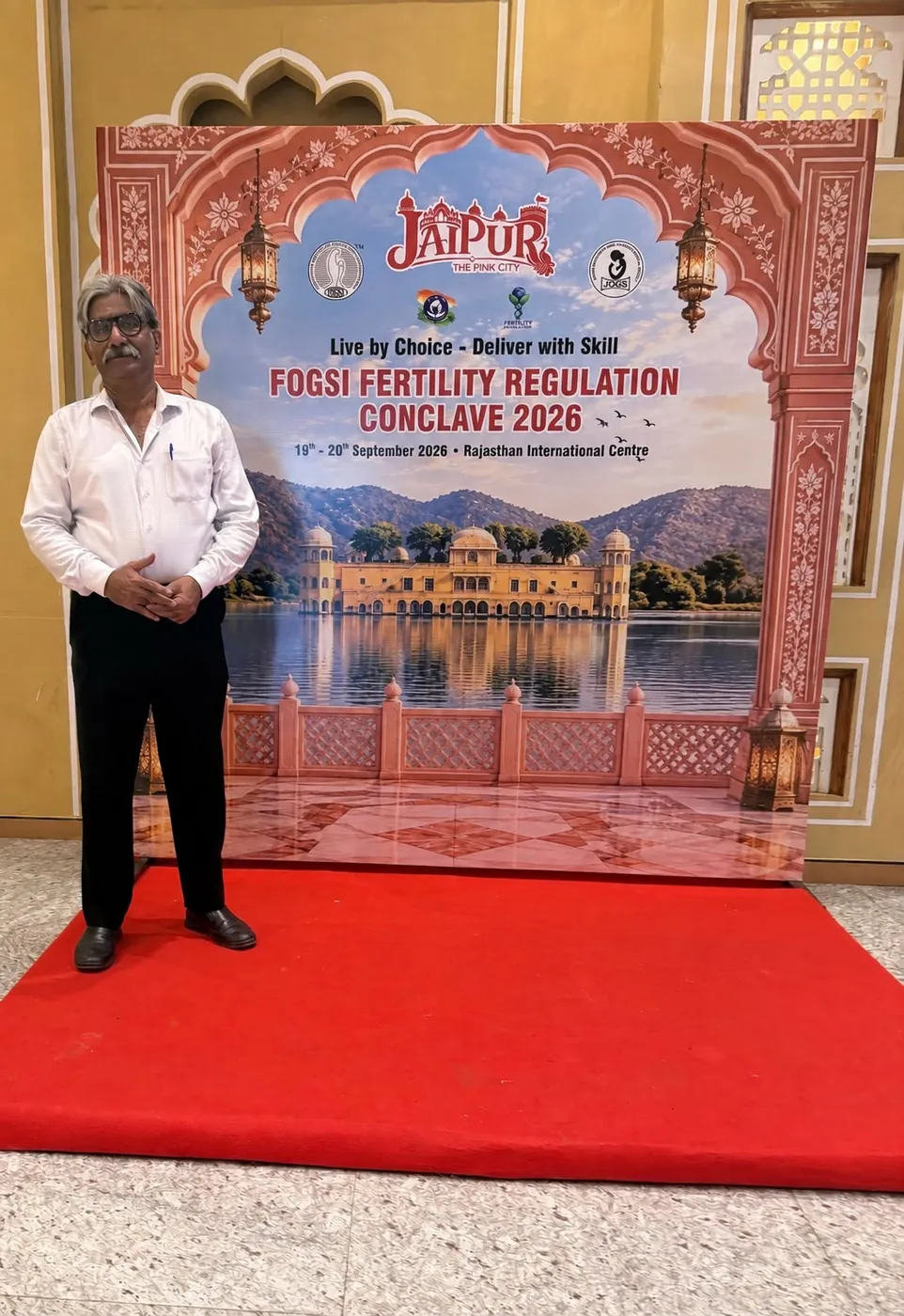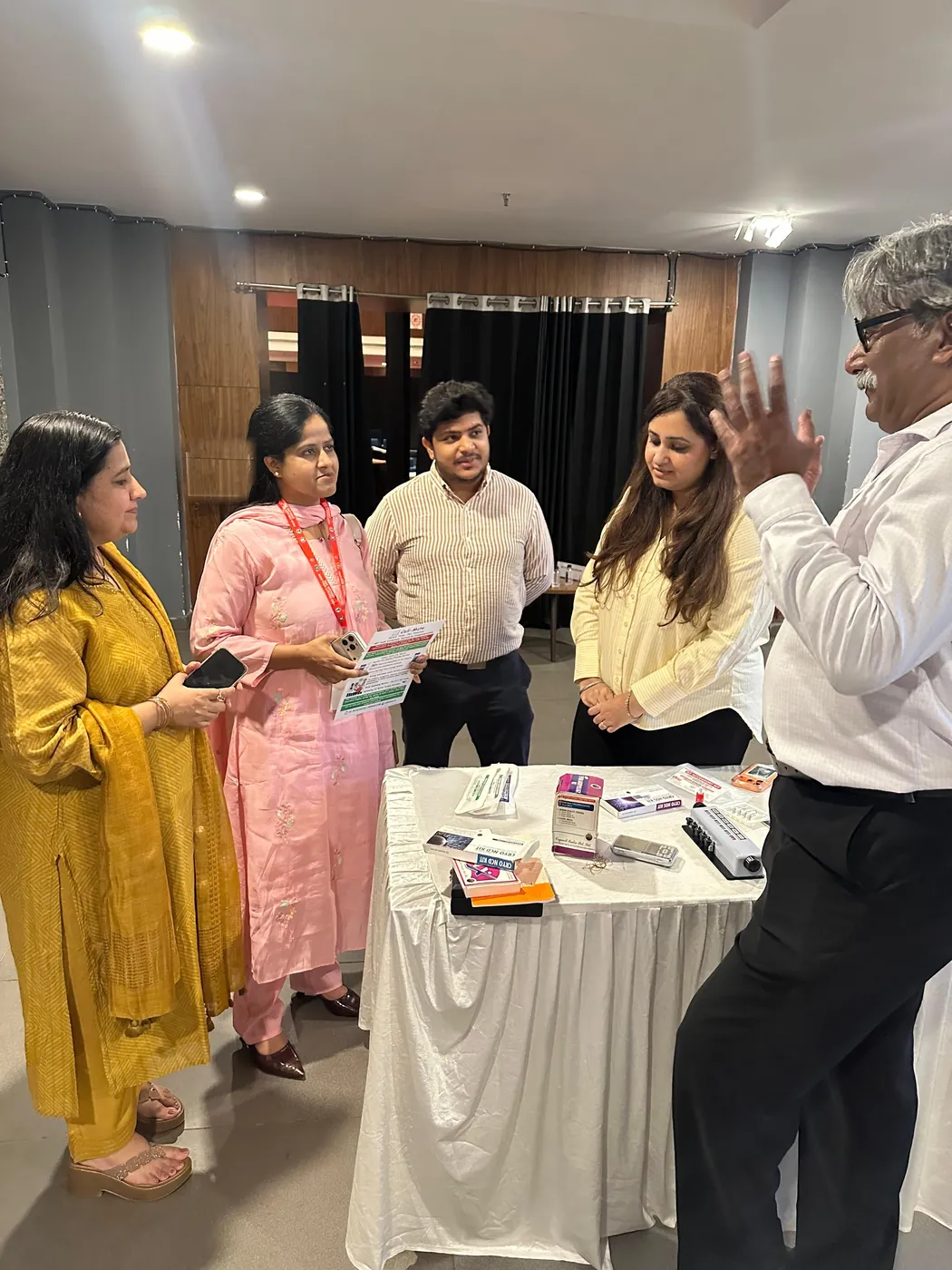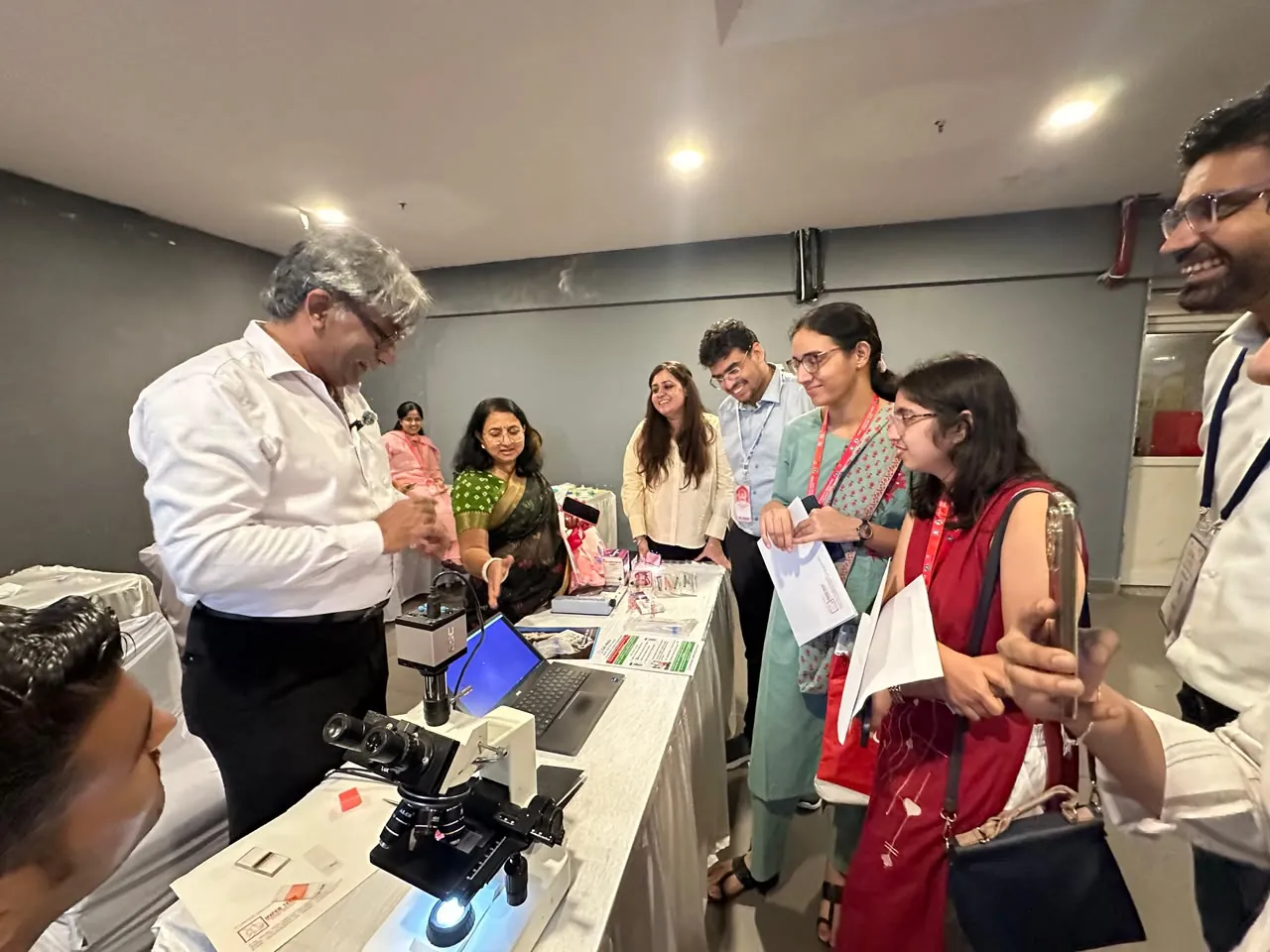
The station covered the two things a report depends on and a hall rarely has time for: how a sample is actually assessed, and what happens to it before anyone uses it.
Everything was worked live, with the field projected from the microscope beside the bench rather than shown from slides. Participants brought their own reporting habits into the conversation, which is where the useful part usually starts.
What the station covered
- Volume, liquefaction, pH and viscosity. The pre-analytical steps where a number is most often lost before the sample reaches the chamber.
- Loading the sperm counting chamber, and counting properly. Concentration and total count, read field by field.
- Motility and its grades, separated out rather than reported as a single percentage.
- Morphology under strict criteria, read at the scope with the field on screen.
- Vitality, and when it changes what a low-motility report means.
- Sperm preparation. Swim-up, single and double density gradient, and how the choice follows the sample rather than the protocol sheet.