Andrology and IVF lab technician jobs: what laboratories look for
The ART (Regulation) Act, 2021 requires every registered clinic and bank to work to defined standards with qualified staff. India now has over 4,600 registered ART clinics and more than 900 registered ART banks, and each one needs people who can perform the laboratory work rather than describe it.
The gap laboratories report when hiring is always the same. Candidates can explain a semen analysis and have never run one. Andrology technician roles, IVF lab technician jobs and embryology assistant positions are all tested the same way: at a bench, on a real sample, with someone watching. Two days of supervised practice is what makes that demonstrable.
Who this is for
- Laboratory technicians already running samples who were never shown the method properly.
- Embryologists whose training covered the female side thoroughly and the male side briefly.
- People entering the field who need bench skills before they can be useful in a laboratory.
- Clinic teams sending more than one person, which is common and worth mentioning when you write in.
Clinicians attend the same course. The technique taught is identical, and nobody is taught a simplified version of anything.
What you leave with
A certificate of completion, recording that you attended and performed the work. There is no registry of certified andrologists in India, so no course can confer that title. What this gives you is the ability to do the work, which is the part a laboratory can test in an afternoon.
Andrology training in India, where this sits
Most andrology teaching in India happens inside a conference session or as part of a broader embryology course, which means an hour or two of exposure rather than two days of practice. This course exists because that was the gap people kept describing afterwards, and it runs in parallel with the invited teaching, which continues and always will.
Common questions
Is there andrology training for technicians in India?
Very little of it is hands-on. Andrology is barely taught as a practical discipline here, and most of what exists is lecture-based or sits inside a wider embryology syllabus. This is two days at the bench in Delhi, in small batches, performing every technique yourself on real samples.
Are placement opportunities available?
Yes. Placement opportunities are available for technicians through our clinical network, built from teaching doctors and laboratory teams across India since 2001.
Will this help me get an IVF lab technician job?
It addresses the gap laboratories describe when they hire: candidates who know the theory and have never run the bench. Andrology technician roles, IVF lab technician jobs and embryology assistant positions all test practical skill, and two days of supervised bench work is what makes that demonstrable.
Do I need a background in embryology?
No. You need to be working in or entering a laboratory setting and comfortable at a microscope. The course assumes you have not been taught andrology properly, because most people have not.
What will I be able to do afterwards?
Perform a full semen analysis to a defined method: volume, liquefaction, pH and viscosity, concentration and total count in the chamber, motility across 200 sperm, morphology under strict criteria, and vitality. Run sperm DNA fragmentation. And carry out swim-up and single and double-density gradient preparation, choosing between them based on the sample and the intended procedure.
How big is a batch?
Deliberately small. Everyone works at a scope themselves, so a batch is kept small enough that someone can be beside you when your technique drifts.
Is a certificate issued?
A certificate of completion is issued, recording that you attended and performed the work. There is no registry of certified andrologists in India, so no course can confer that title.
Where is it held and how long is it?
Two days, in Delhi. Participants travel in from across the country, and we can help with a place to stay nearby, so mention it when you write in.
Why are andrology skills in demand?
The ART (Regulation) Act, 2021 requires every registered clinic and bank to work to defined standards with qualified staff, and India has over 4,600 registered ART clinics and more than 900 registered ART banks.
Register your interest
Tell us where you work and we will be in touch as the next batch forms. Batches are small and fill quickly, and we can help out-of-town participants with a place to stay nearby.
Register your interest →
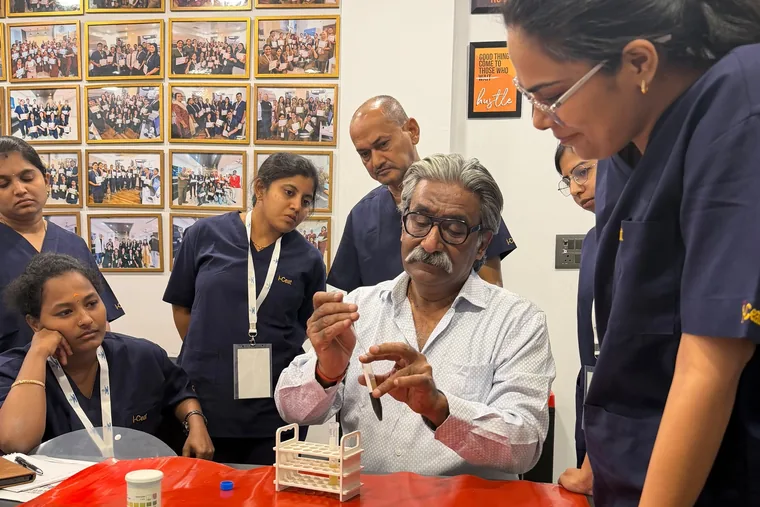 Holding the tube, everyone watching the hands
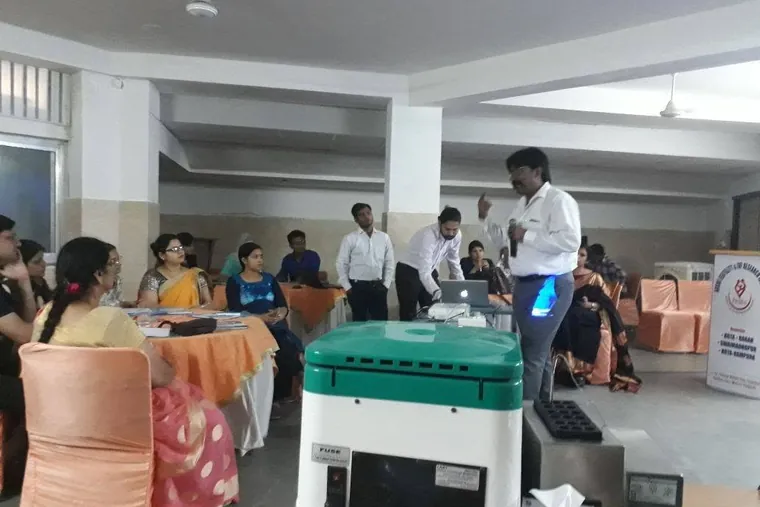 Semen analysis and interpretation, projected
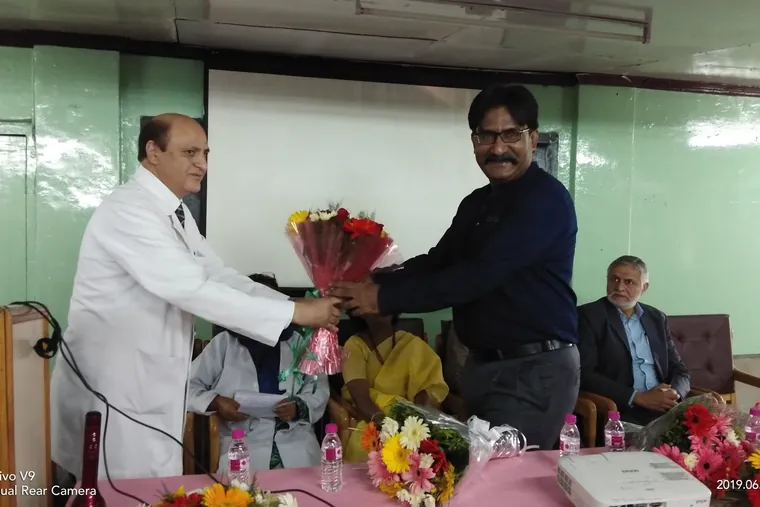 Felicitated after a hands-on session
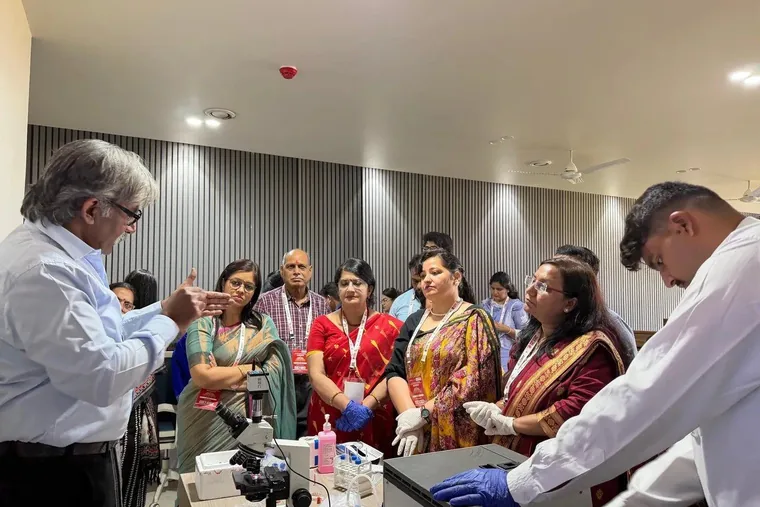 Gloved, round the microscope at a hospital bench
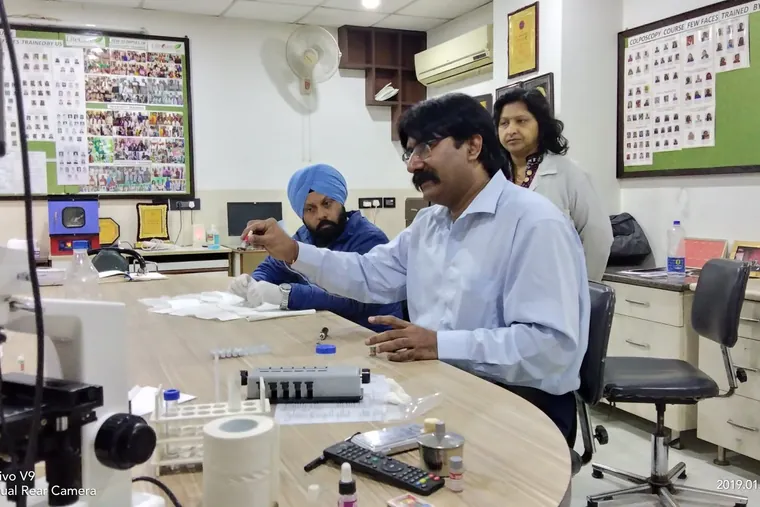 At the bench with the group
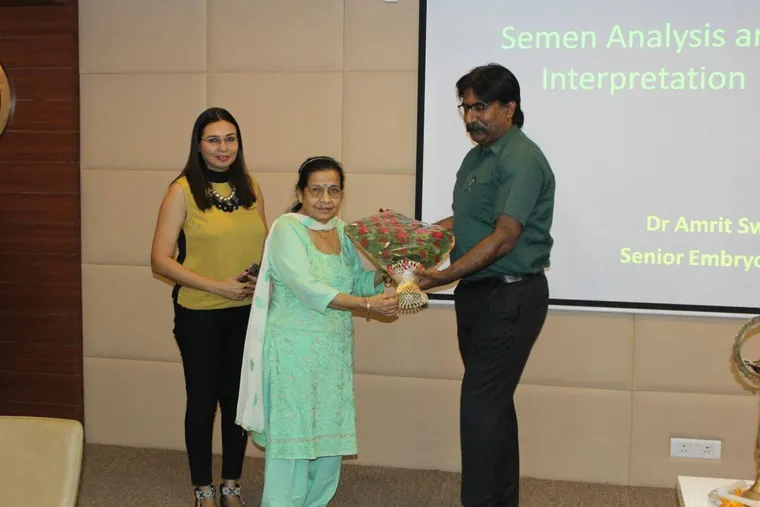 Felicitated by the organising committee
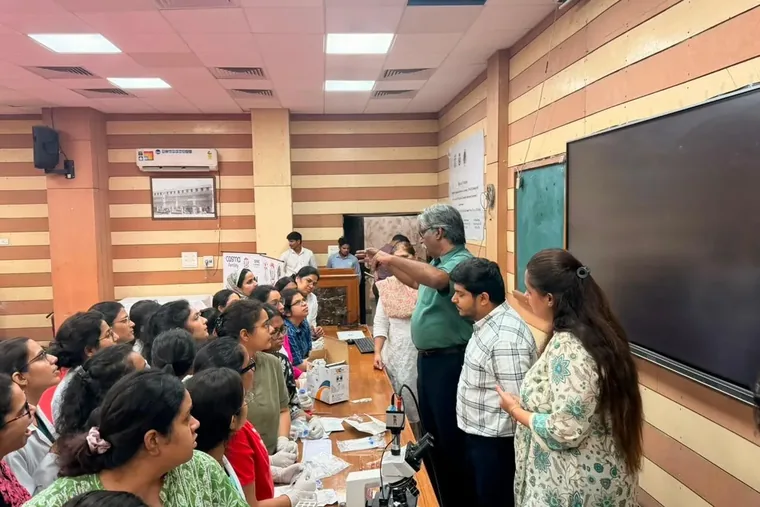 A dozen clinicians pressed round the bench
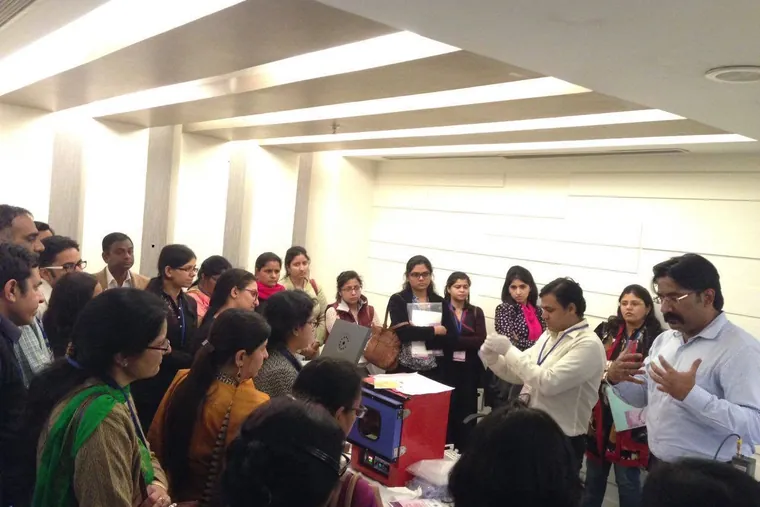 Round the bench, everyone looking
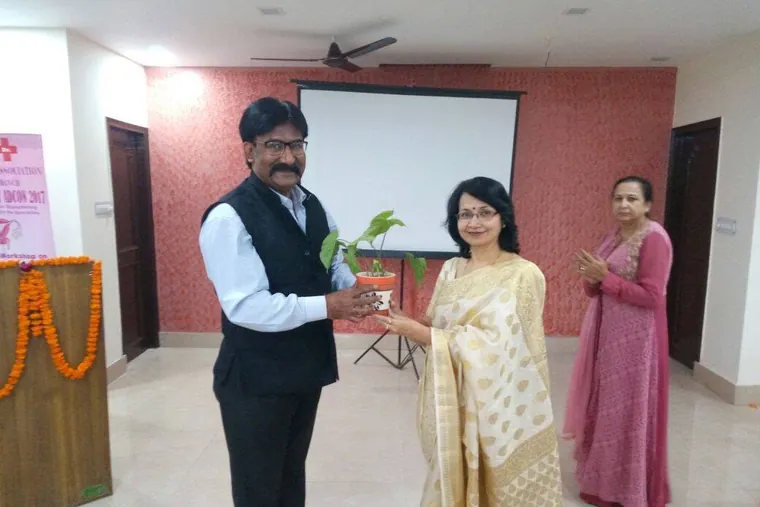 Received at a hospital session
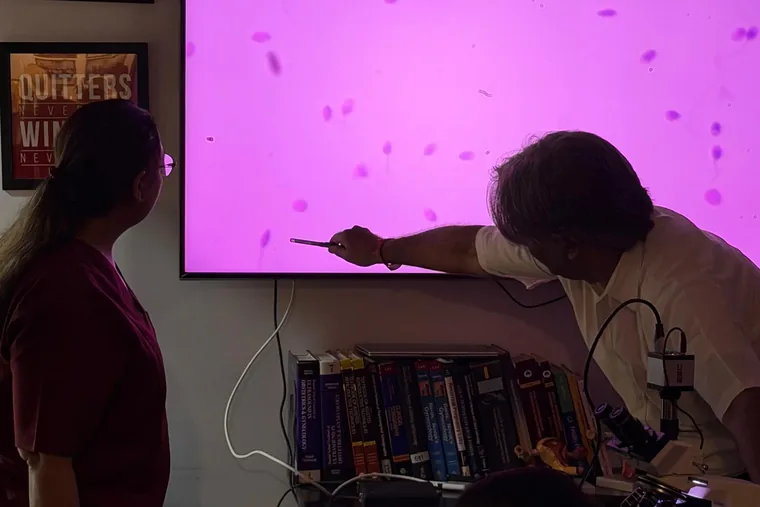 Morphology projected, pointing out the defect
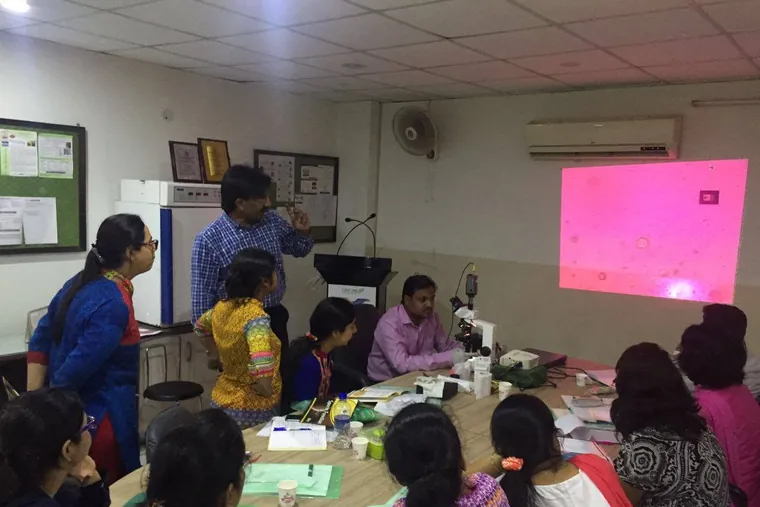 Working through a preparation
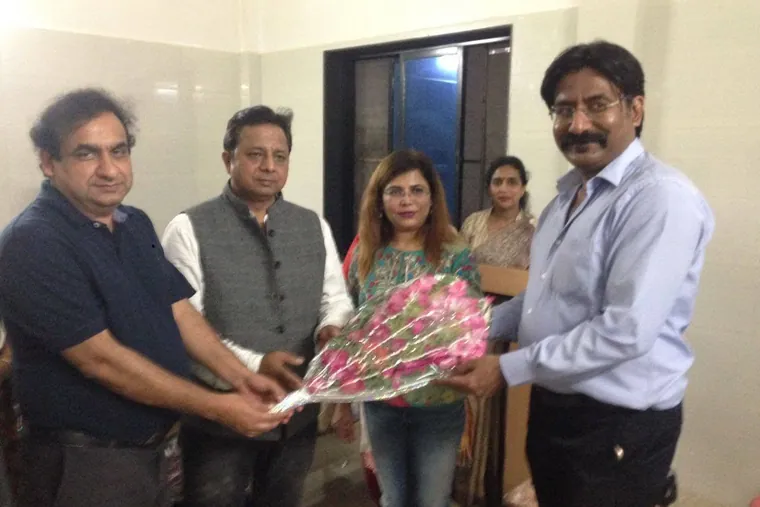 Felicitated at a conference workshop
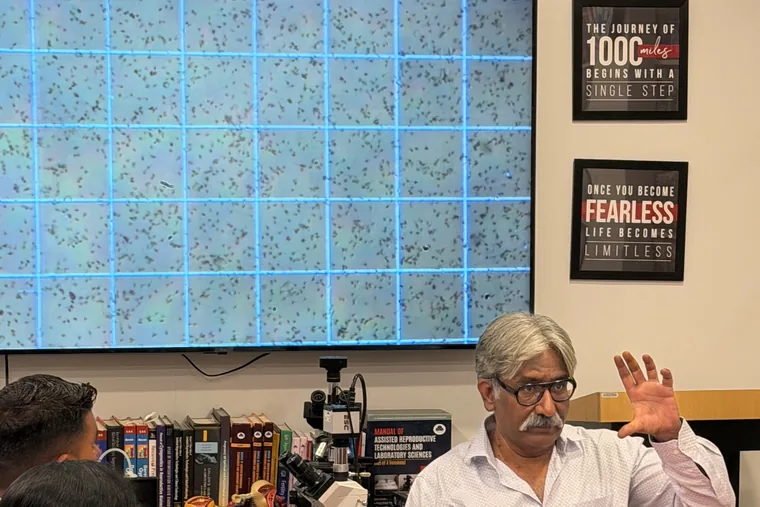 Counting chamber on screen, mid-explanation
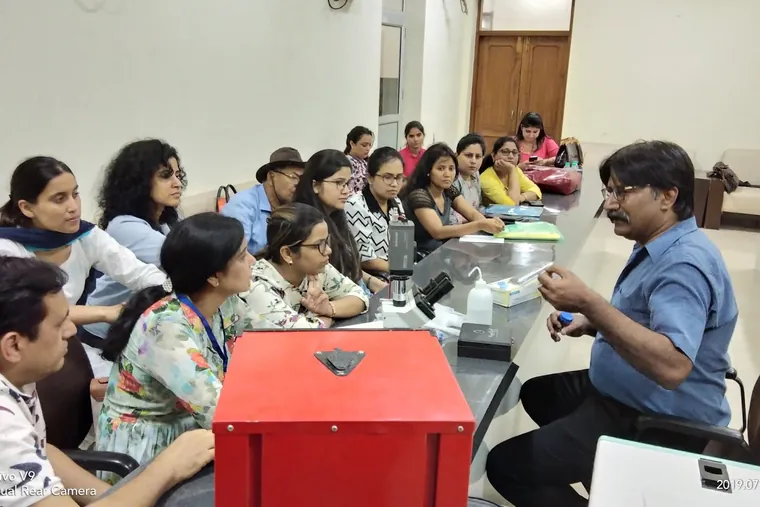 Demonstrating at the bench
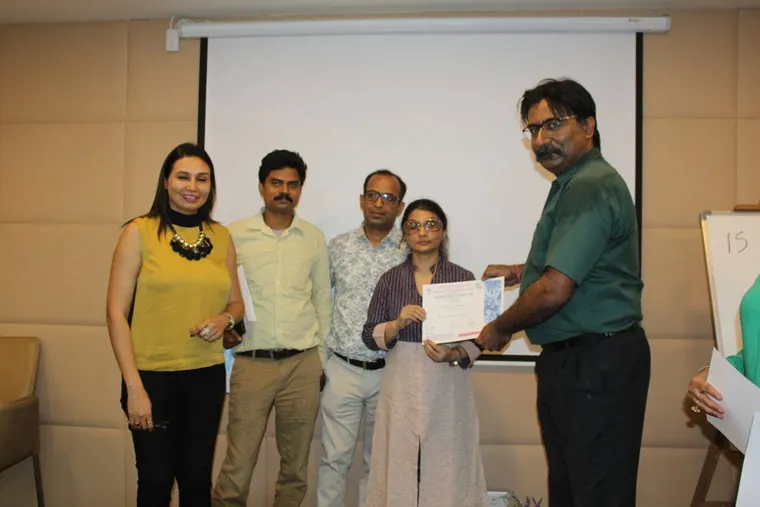 Certificate handover after training
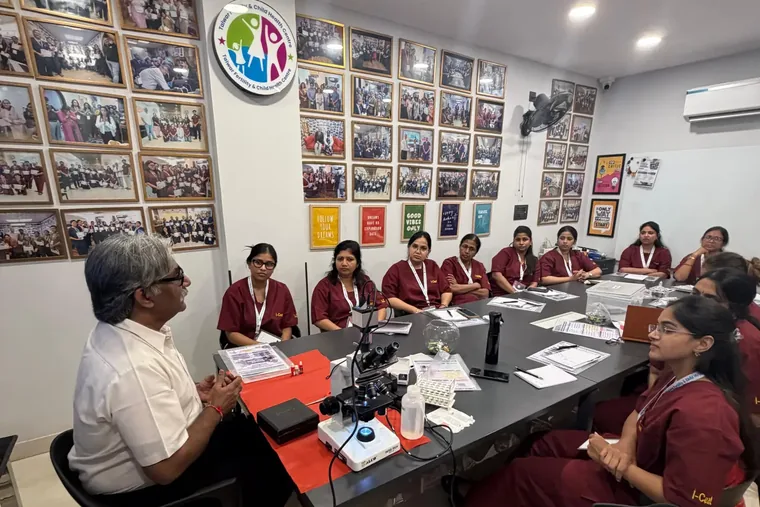 Teaching a full table, microscope between them
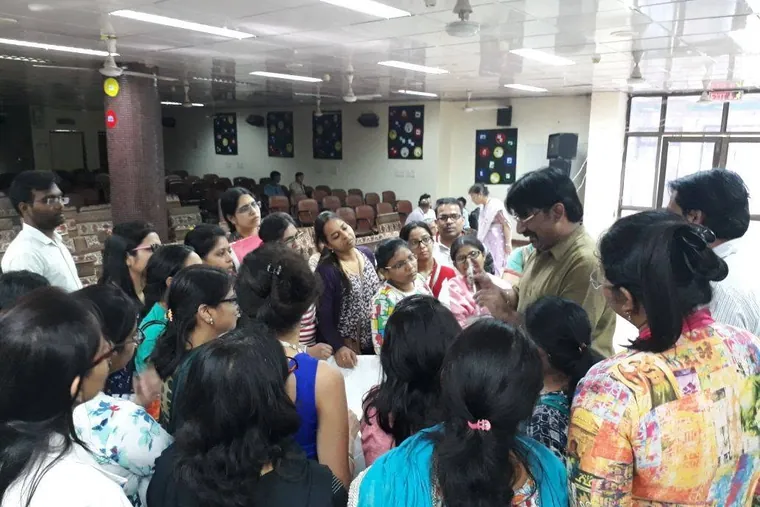 A full room at the microscope
 Felicitated at a CME
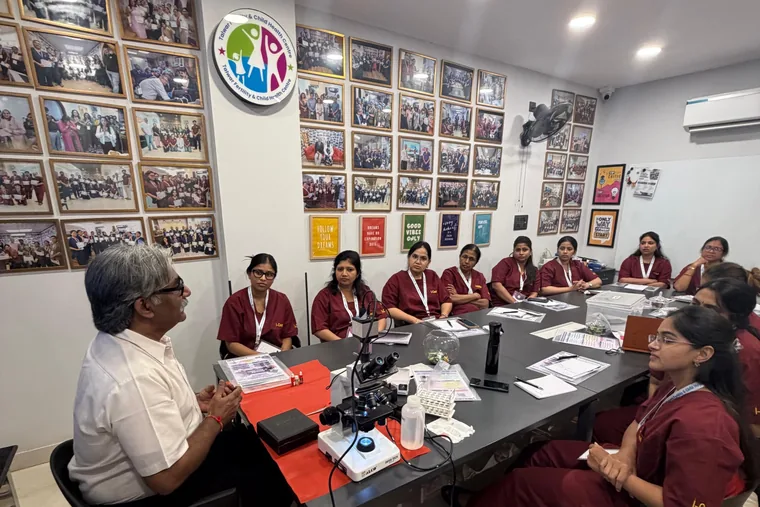 A session in progress
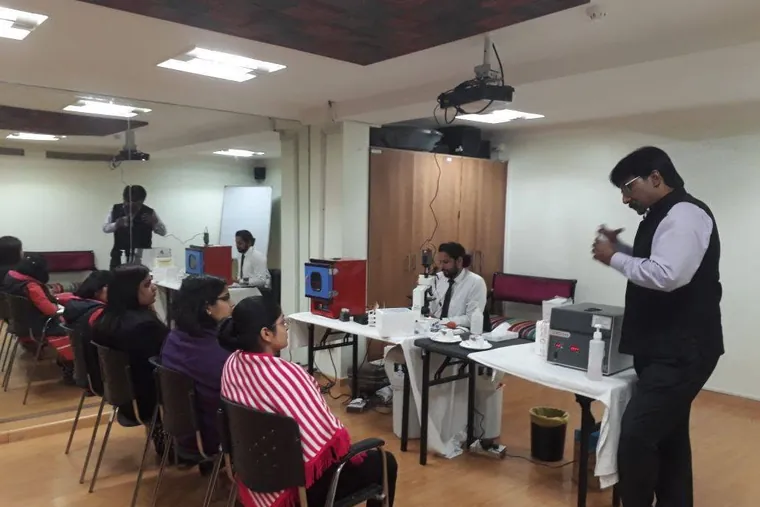 Live demonstration for the room
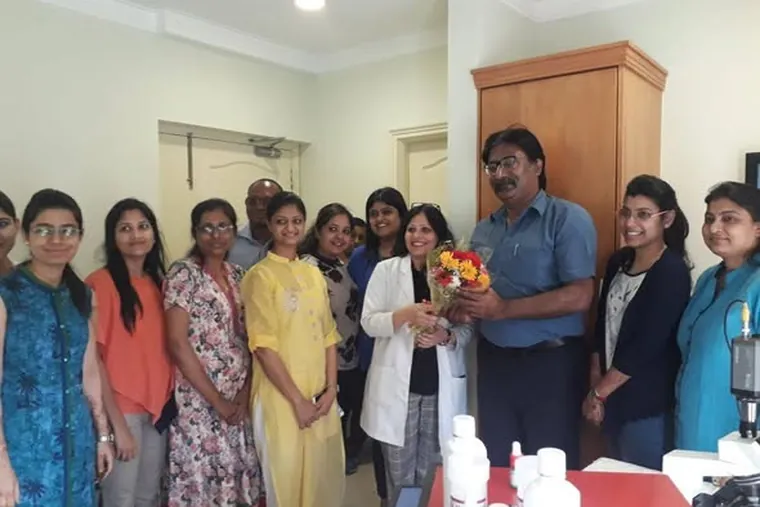 After a session, with the group
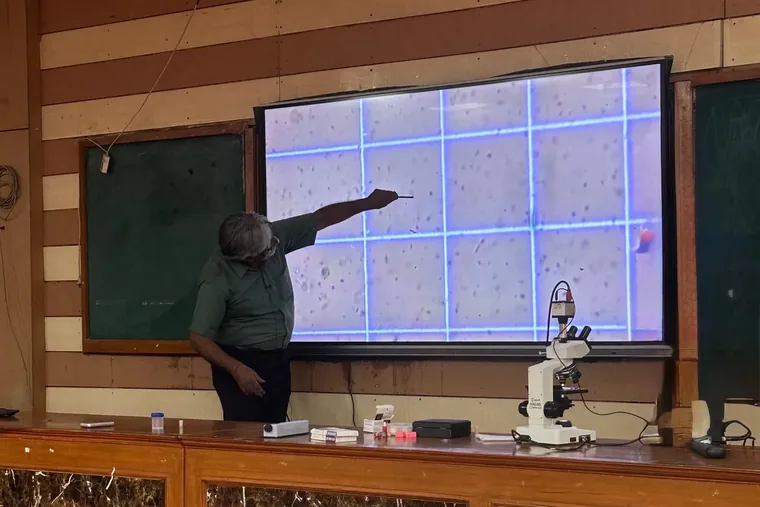 At a medical college, chamber projected
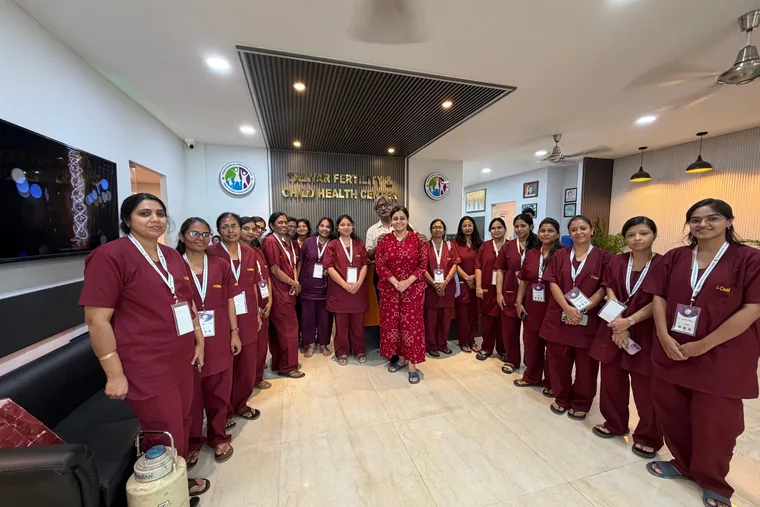 The cohort, after the session
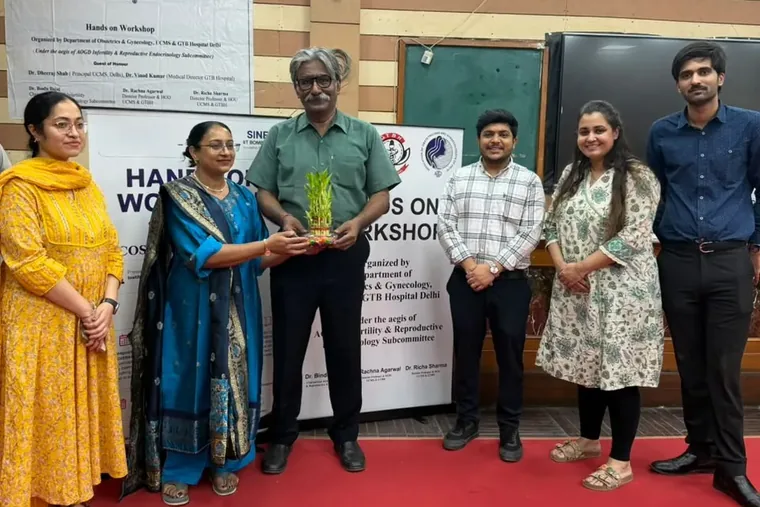 Felicitated at the UCMS and GTB workshop
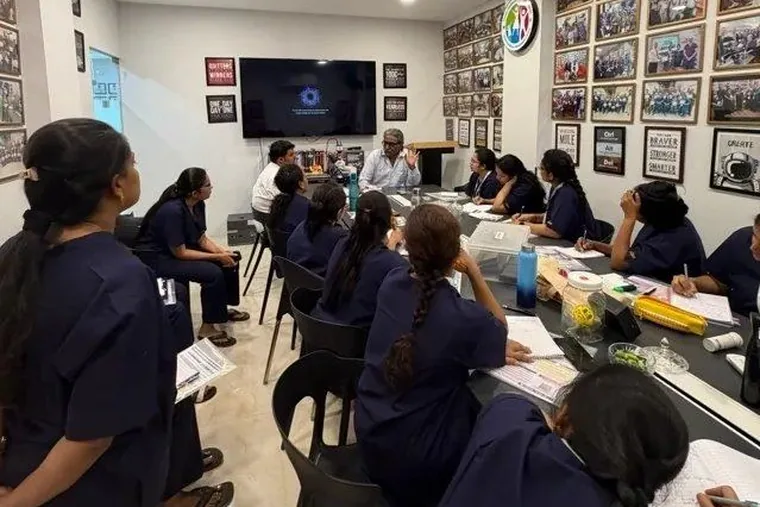 Demonstrating to residents, UCMS and GTB Hospital
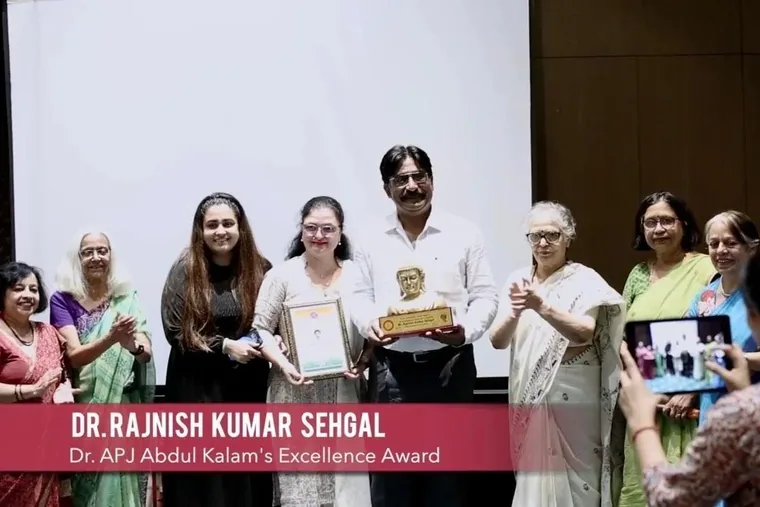 Dr APJ Abdul Kalam Excellence Award