 Cell Mate
For most people facing a cancer diagnosis, the focus, rightly, is survival. But the same treatments that save lives, chemotherapy and radiation, can quietly compromise fertility, sometimes permanently. The window to protect that option is narrow: it opens at diagnosis and closes the moment treatment begins. Too often, no one raises it in time.
That gap is what brought Cell Mate to Asian Hospital Faridabad, where our team led a CME (Continuing Medical Education) session for the hospital's clinicians on the importance of fertility preservation for cancer patients, covering both sperm freezing and egg (oocyte) freezing, followed by an open Q&A. The aim was simple: make fertility preservation a routine part of the cancer-care conversation, before treatment starts.
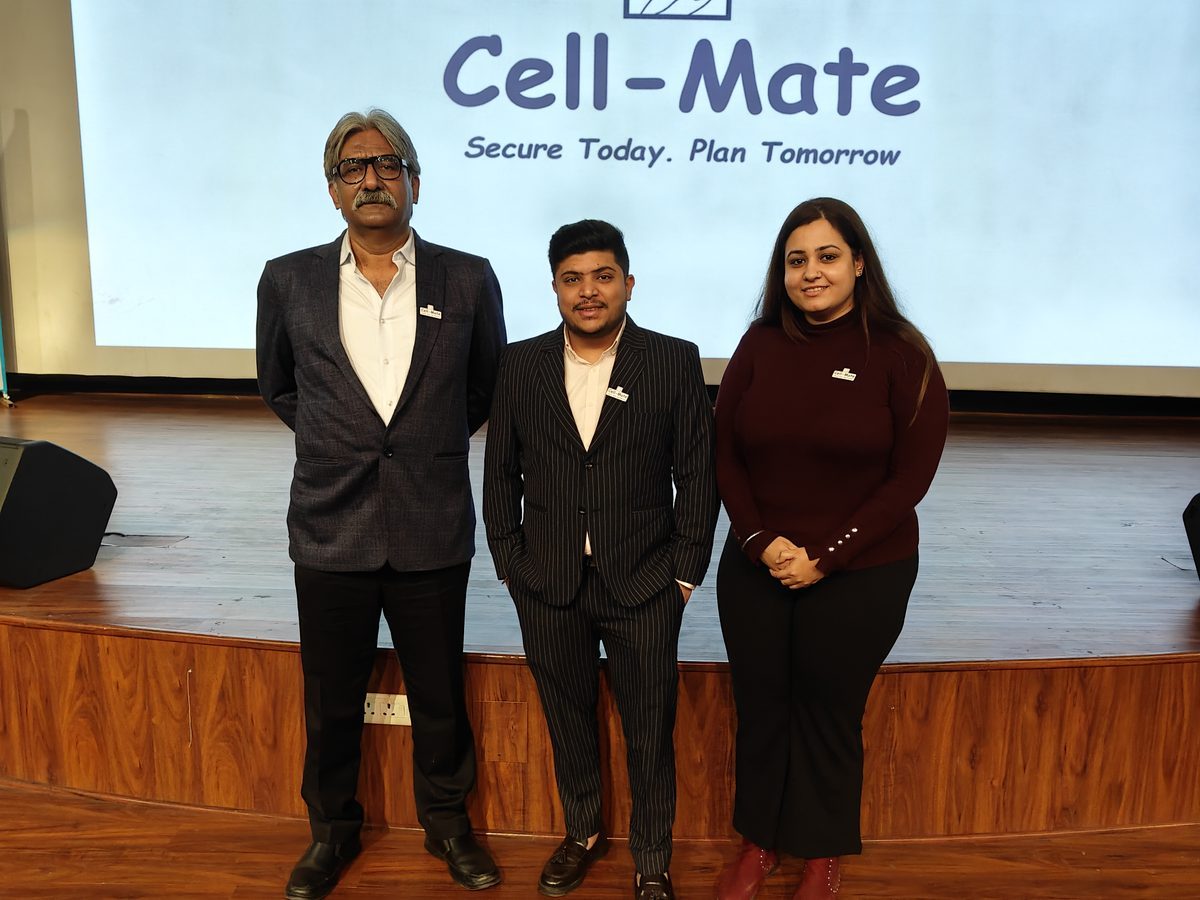
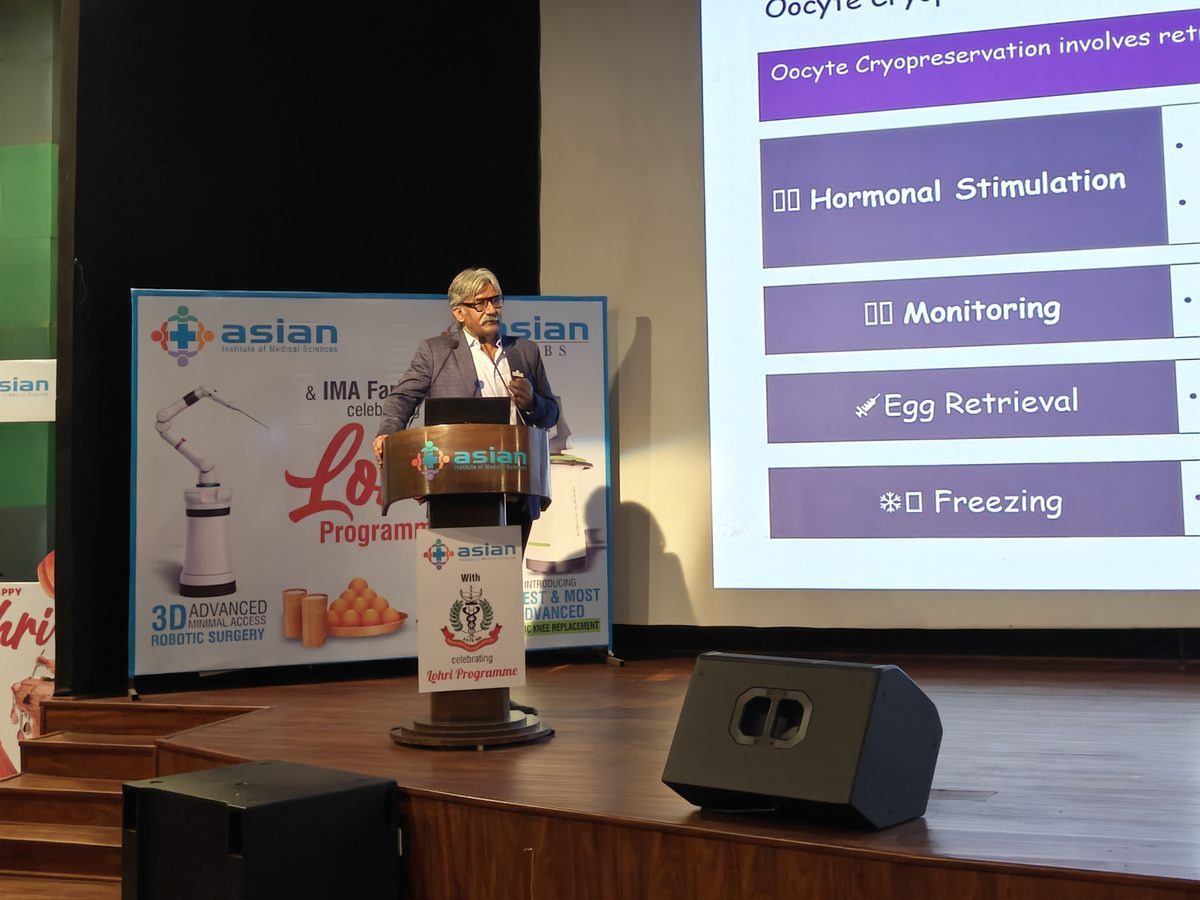
Cell Mate’s founding team, Rajnish Sehgal, Mishank Nagpal and Dr. Sakshi Sehgal, at Asian Hospital Faridabad (left); Rajnish presenting the cryopreservation process to clinicians (right)
Oncofertility
Why Cancer Patients Can't Wait
Chemotherapy and radiation work by attacking rapidly dividing cells, and reproductive cells are among the most vulnerable. Depending on the treatment, the effect on eggs and sperm can range from temporary to permanent. For younger patients especially, that loss isn't only clinical; it's the quiet closing of a door to parenthood many haven't yet had the chance to think about.
Preservation changes that. A sperm sample, or a single cycle of egg freezing completed before treatment begins, keeps the option open, to be used if and when the patient is ready, fully recovered, years later. The science is well established. What's frequently missing is someone putting the option on the table in time.
The Session
Both Sides of Preservation, Sperm and Egg Freezing
Led by Rajnish, who brings four decades in andrology and cryopreservation, the session covered fertility preservation for both men and women facing cancer treatment, giving equal weight to each.
For men, sperm freezing (sperm cryopreservation) is fast and non-invasive, and can often be completed within days of diagnosis, before treatment begins. The team walked through semen analysis, freezing and thawing viability, and how to bank a sample quickly when the treatment clock is already running.
For women, egg freezing (oocyte cryopreservation) involves a short cycle of hormonal stimulation, monitoring, egg retrieval and freezing. Clinicians were taken through each stage, the viability and success rates behind it, and how to weigh the timeline against an urgent treatment plan.
Throughout, Cell Mate's role was clear: we are a dedicated preservation brand and a registered ART bank, focused exclusively on the cryopreservation of sperm and eggs. We don't treat, and we never compete for the patient. The treating oncologist keeps their patient and their treatment plan; Cell Mate simply safeguards the option of a family for later.
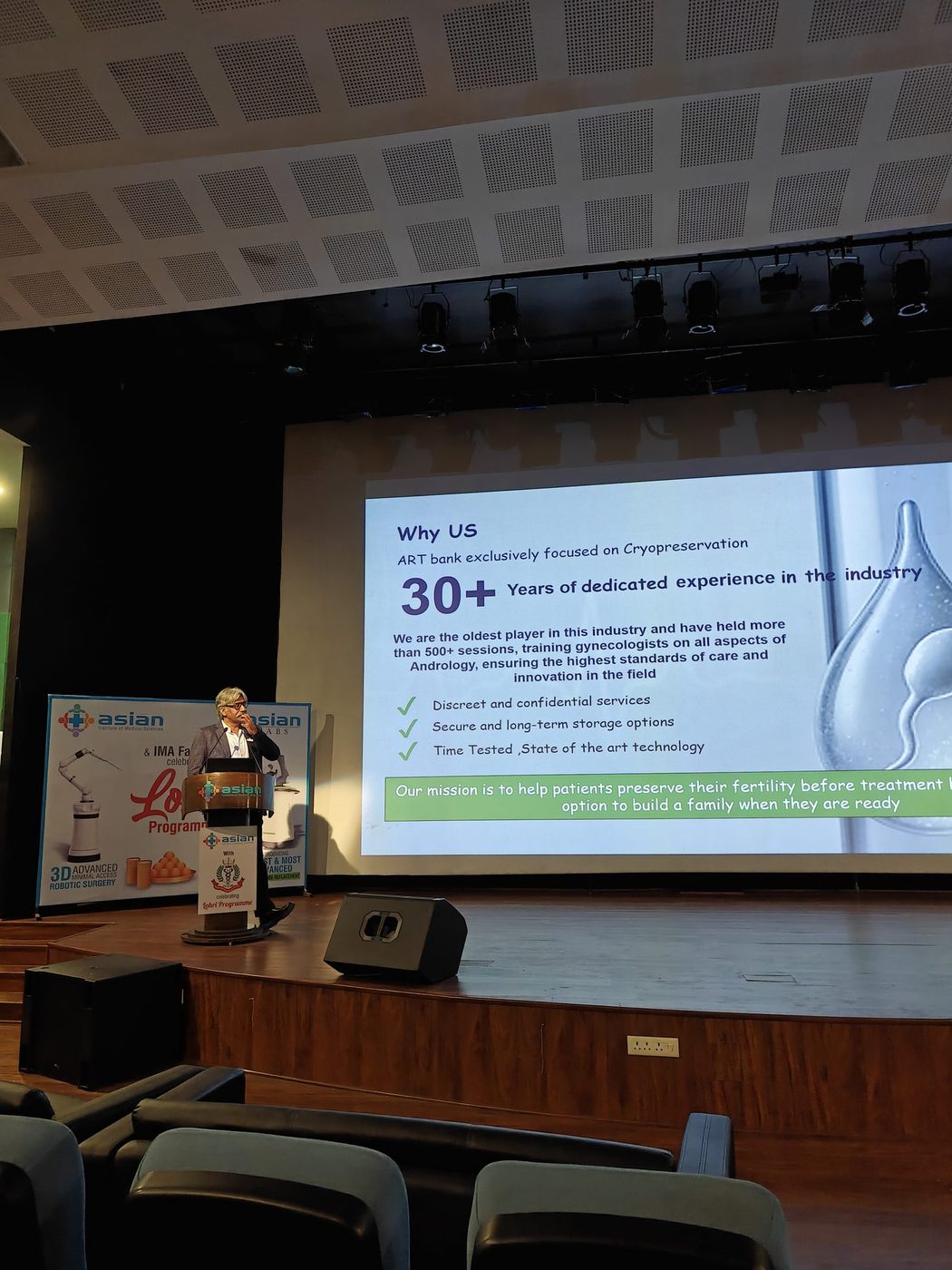
A dedicated ART bank focused only on cryopreservation, with decades of preservation experience behind the science
Q&A
An Engaged Room
The session closed with an extended Q&A. Questions ran from the practical, how quickly a sample can be banked after diagnosis, storage duration, logistics, to the clinical: viability after thawing, counselling a reluctant patient, and coordinating preservation alongside an urgent treatment timeline. The engagement reflected something we see often: clinicians want to offer this, they just need a preservation partner they can reliably refer to.
That is exactly the relationship Cell Mate is built for, a clinic-agnostic preservation layer that referring doctors can trust, without ever giving up their patient.
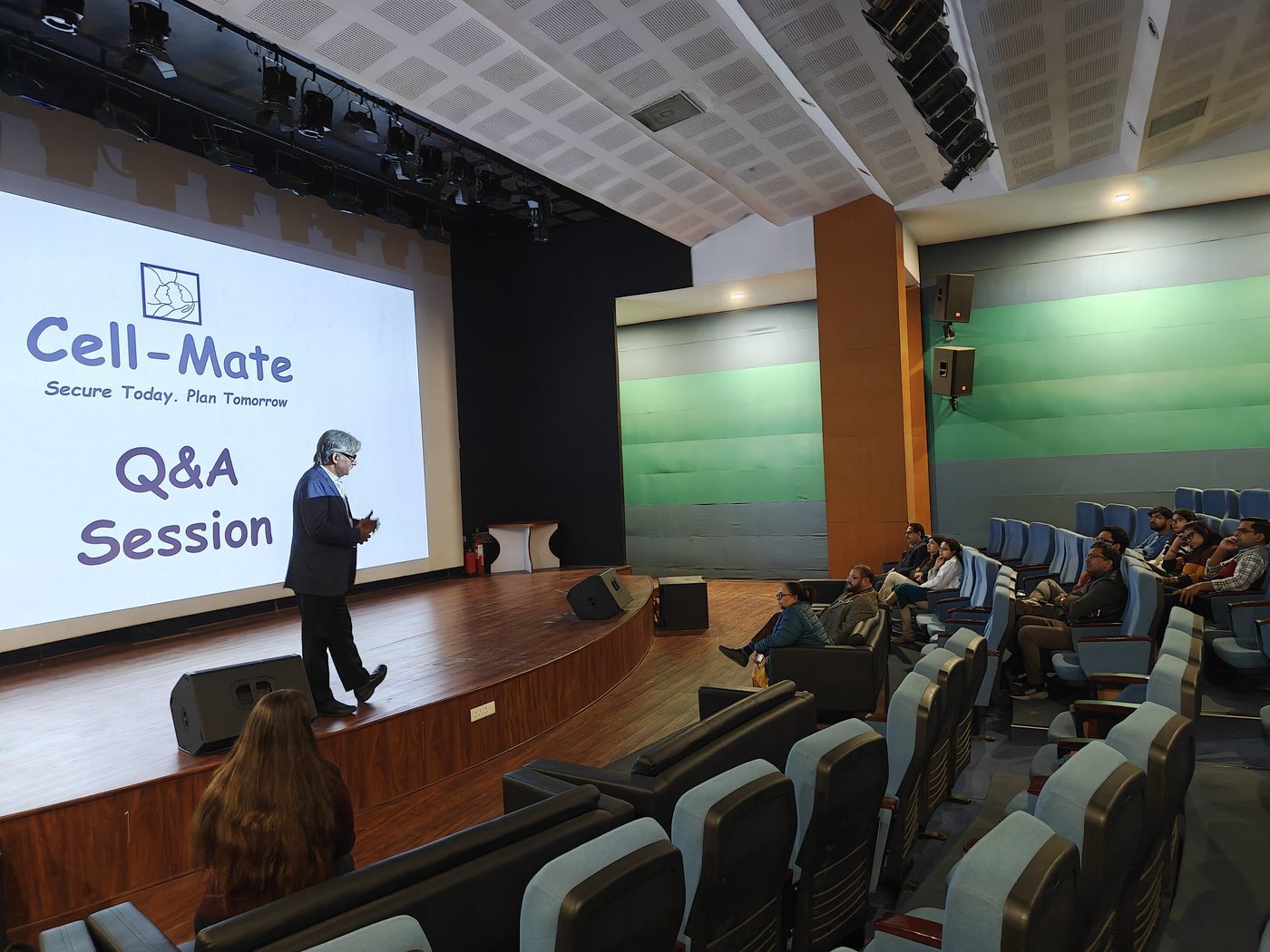
Clinicians at Asian Hospital Faridabad during the Q&A session
For a cancer patient, fertility preservation is rarely the first thing on their mind, and far too often, no one raises it until the window has already closed. Changing that begins with the clinicians who meet patients at diagnosis.
This is the work Cell Mate was built around, not just preserving fertility, but building the clinical ecosystem that makes preservation a standard part of care.
If you or someone you know is facing cancer treatment
These sessions exist because fertility is often the last thing anyone raises before treatment starts. If that is where you are right now, the two decisions run on very different clocks.
Sperm freezing before chemotherapy can usually be arranged in a day or two, without delaying the start of treatment. Egg freezing before cancer treatment needs around two weeks, and whether that window exists is a question for your oncology team rather than for us.