In-depth sperm testing · Delhi NCR
A sperm report can come back entirely normal and the couple still cannot conceive. Vitality, strict morphology and DNA fragmentation are the parameters that explain why, and they are the ones most reports never include.
A sperm report can come back entirely normal and the couple still cannot conceive.
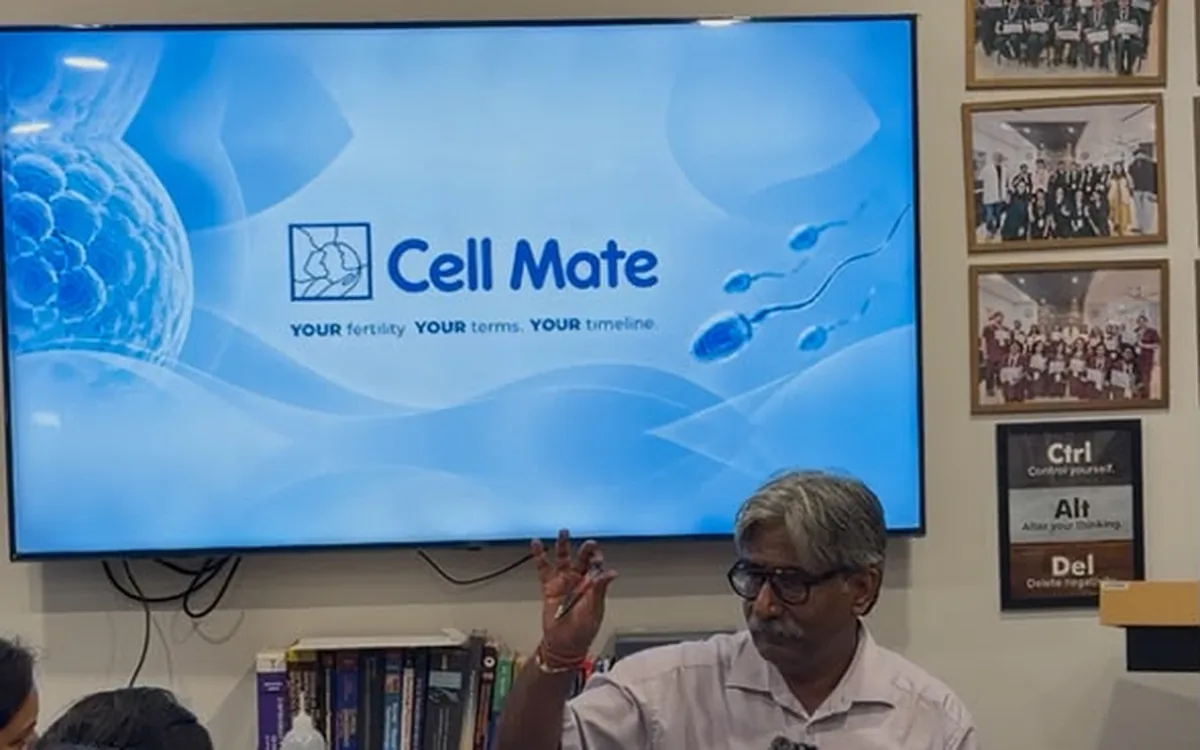
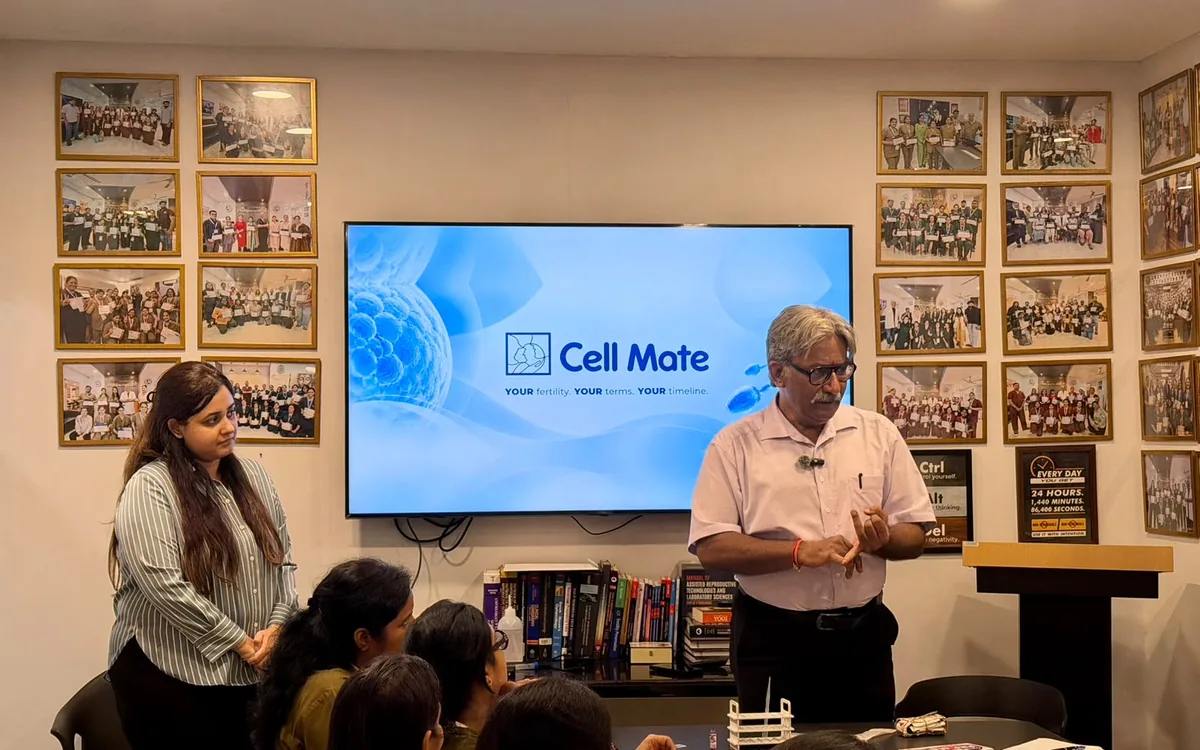
That sentence has a way of stopping a room. It did again this week, when a group of clinicians spent the day with us at the microscope, working through what a sperm count test actually measures and, more usefully, what it leaves out.

Most of andrology gets compressed into three numbers. Count, motility, volume. They sit at the top of every report, they are the numbers the couple reads, and they are the numbers a decision often gets made on. They are also nowhere near the whole picture.
Sperm count tells you how many. It does not tell you whether those sperm are alive, whether they are shaped in a way that lets them fertilise anything, or whether the genetic material inside them is intact.
A sample can have a healthy count and poor vitality. It can have normal motility and severe morphological defects under strict criteria. It can look clean on every conventional parameter and carry high DNA fragmentation. Each of those is a different problem with a different answer, and none of them appear if you stop at the first three lines.
This is not academic. Four situations where looking past count and motility changes what happens next.
By definition, the standard workup came back normal. In a meaningful share of these couples the male workup was a basic sperm count test and nothing further. Vitality, strict morphology and DNA fragmentation are exactly the parameters that were never checked, and exactly the ones that can be abnormal behind a normal-looking report.
Conception happens, the pregnancy does not continue. The investigation usually runs through the female side in detail. Sperm DNA fragmentation is associated with early loss, and the paternal contribution is often not examined at all.
Good-looking eggs, reasonable fertilisation, then poor embryo development or repeated implantation failure. Sperm with fragmented DNA can fertilise an egg perfectly well. The damage tends to show up later, once the paternal genome starts being expressed. A couple can go through more than one cycle before anyone asks about it.
Morphology under strict criteria and DNA integrity inform both the technique and the sperm preparation method. That decision is better made on real data than on a count.
We work at the microscope rather than from slides, because andrology is a visual skill and you cannot learn it from a lecture. The same applies to reading a report properly.

Counting chamber technique, what a genuine field looks like against debris, and why two laboratories can return different numbers on the same sample. Method matters more than most people assume, and WHO reference values only mean something if the technique behind them was sound.
Distinguishing sperm that are immotile from sperm that are dead. They look identical on a routine slide and lead to entirely different conclusions. A man with a high proportion of live but immotile sperm has a very different prognosis from one whose sperm are simply not alive.
This is where assessments diverge most between laboratories. Strict criteria are unforgiving by design, and applying them consistently takes practice on real slides rather than a diagram in a textbook.
Multiple techniques, and when each one is appropriate. Preparation affects what you recover and what can be done with it afterwards.
The one the conversation kept returning to. Count is fine, motility is fine, the report looks clean, and the DNA inside those sperm is damaged. More on the DNA fragmentation test.
If you are starting from a standard report, read how to read your semen analysis report first, then come back to what the in-depth panel adds on top.
Not through carelessness. Andrology is barely taught. A clinician can complete years of training having spent almost no structured time on the male side, then meet couples where male factor is involved in roughly half of all cases (WHO).
You cannot order a test you were never shown.
Something we see in how men look for this. They search for a "sperm count test", not a "semen analysis". The clinical term and the patient term have drifted apart, and a large number of men arrive holding a report they cannot read, having been handed a number without a framework for it.
That matters for the consultation. A man who understands what is being measured, and why the second and third tests exist, is far more likely to complete the workup rather than stop at the first normal-looking result.
Fair question, because a test only helps if it changes something.
Fragmentation is not a fixed number. It moves. Infection, varicocele, heat, smoking, long abstinence, oxidative stress from the ordinary shape of a working life. Some of that is treatable, some responds to three months of doing things differently, and three months is roughly how long a new cycle of sperm takes to be made.
So the answer is usually not to intervene harder. Find the cause, correct what can be corrected, retest.
What is frustrating is how often a couple has been through two cycles before anyone looks at this at all.
We do preservation and testing only. No IVF, no fertility treatment. That is worth saying plainly to a clinician, because it means we are not anyone's competition and we have nothing to refer a patient away into. The patient stays yours.
What we have is 30+ years of andrology and cryopreservation in-house, an ART-registered laboratory, and a team that has spent decades on exactly these techniques.

An in-depth sperm test covering count, motility, vitality, morphology under strict criteria and DNA fragmentation, read by a team that has spent decades on exactly this.
Book in-depth sperm testing →A basic sperm count test reports count, motility and volume. In-depth testing adds vitality, morphology assessed under strict criteria, and sperm DNA fragmentation. These measure whether sperm are alive, correctly formed, and carrying intact genetic material, which the top-line numbers do not show.
Yes. A sample can have a normal count and normal motility while carrying high DNA fragmentation, poor vitality or severe morphological defects. This is one reason some cases end up labelled unexplained infertility.
It is most useful in unexplained infertility, recurrent pregnancy loss, failed or poor IVF cycles, and before deciding on sperm preparation technique. It is also reasonable where a couple has a normal basic report and still no explanation.
Often, yes. Fragmentation is not a fixed number. Infection, varicocele, heat, smoking, long abstinence and oxidative stress can all raise it. Some causes are treatable and others respond to changes over about three months, which is roughly how long a new cycle of sperm takes to be produced.
No. Cell Mate provides fertility preservation and diagnostic testing only. It does not perform IVF or fertility treatment, so there is no treatment to refer a patient into.
Go beyond the basic report. Book a sperm test with vitality, strict morphology and DNA fragmentation included.
Book a free consultation →Cell Mate provides fertility preservation (egg and sperm freezing) and diagnostic testing only, not IVF or fertility treatment. Egg retrieval, where required, is performed by a licensed Level-2 ART/IVF partner. This page is general information, not medical advice. Cell Mate is a registered ART bank under the ART (Regulation) Act, 2021.
 Cell Mate